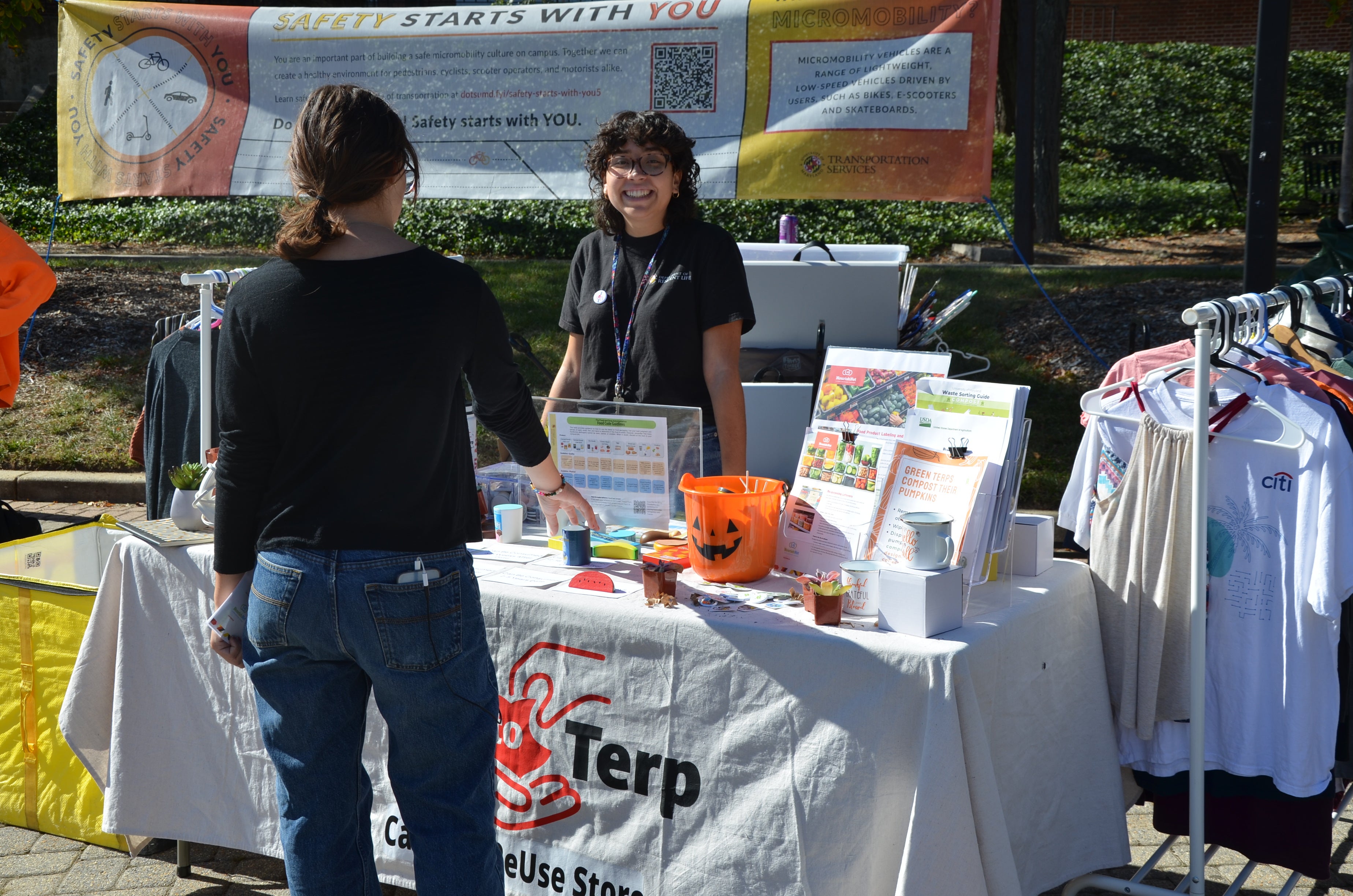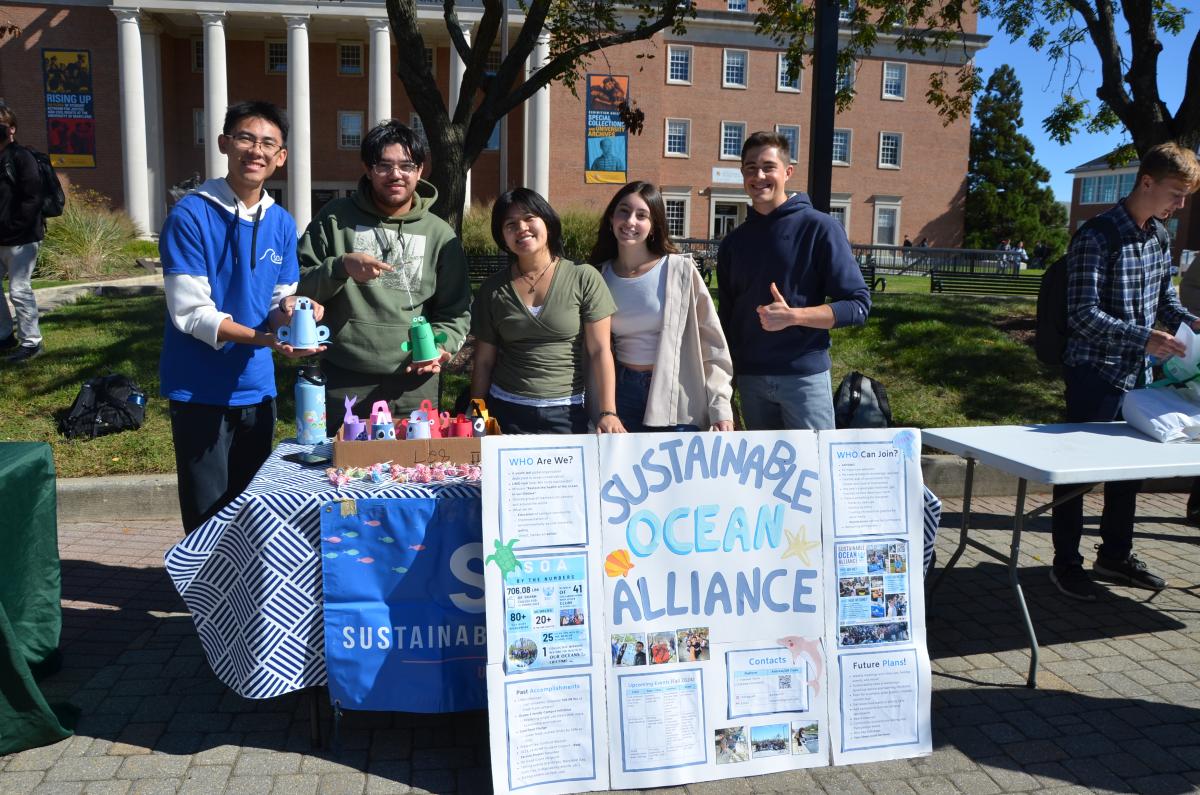
In honor of Campus Sustainability Month, the Office of Sustainability hosted events and shared content to engage students in the topics of climate emotions, climate justice, climate resilience and climate research throughout October. Campus Sustainability Month celebrates the sustainable achievements of the university by educating the campus community on the various ways they can get involved, and inspiring positive changemakers. 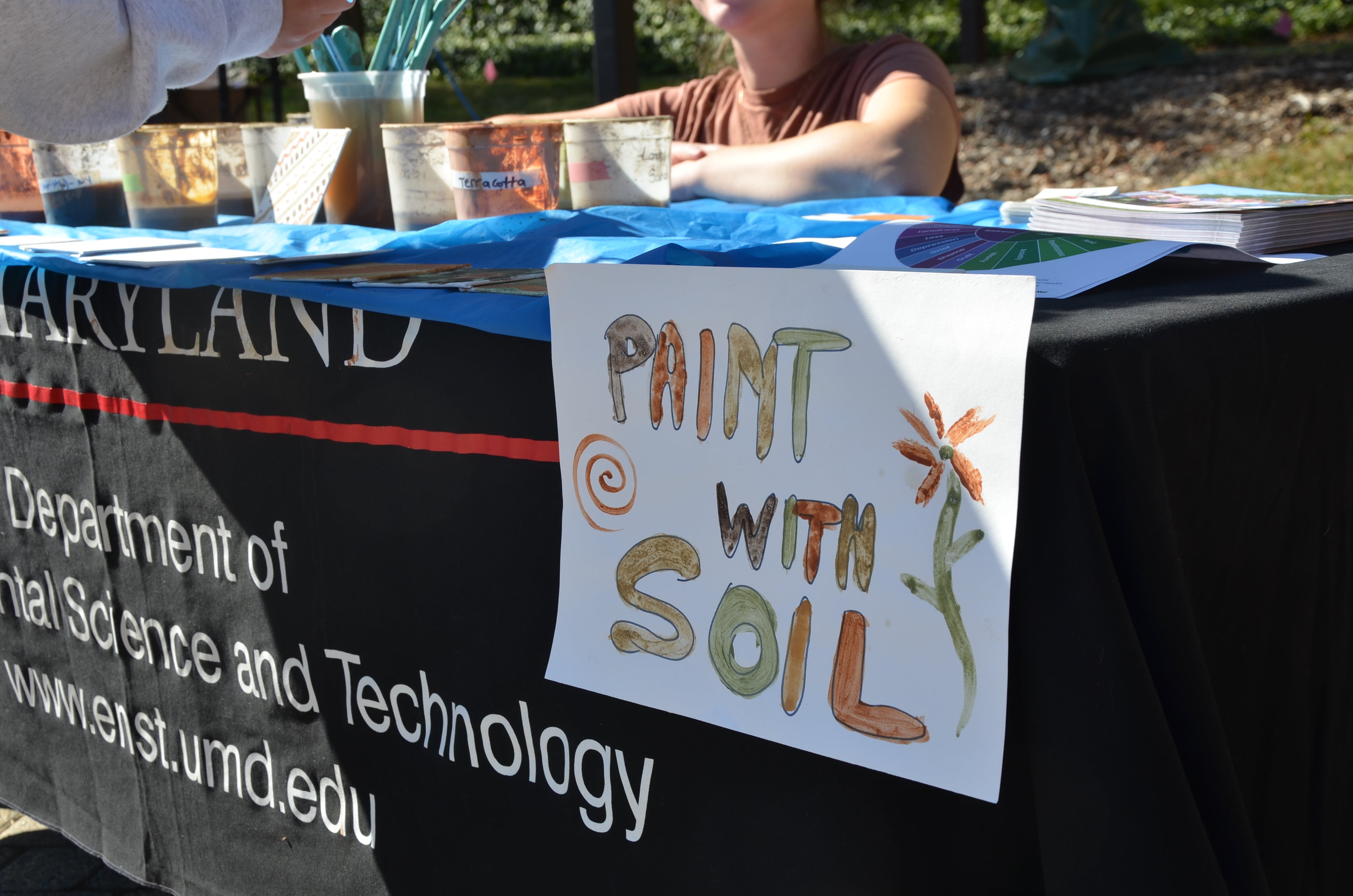
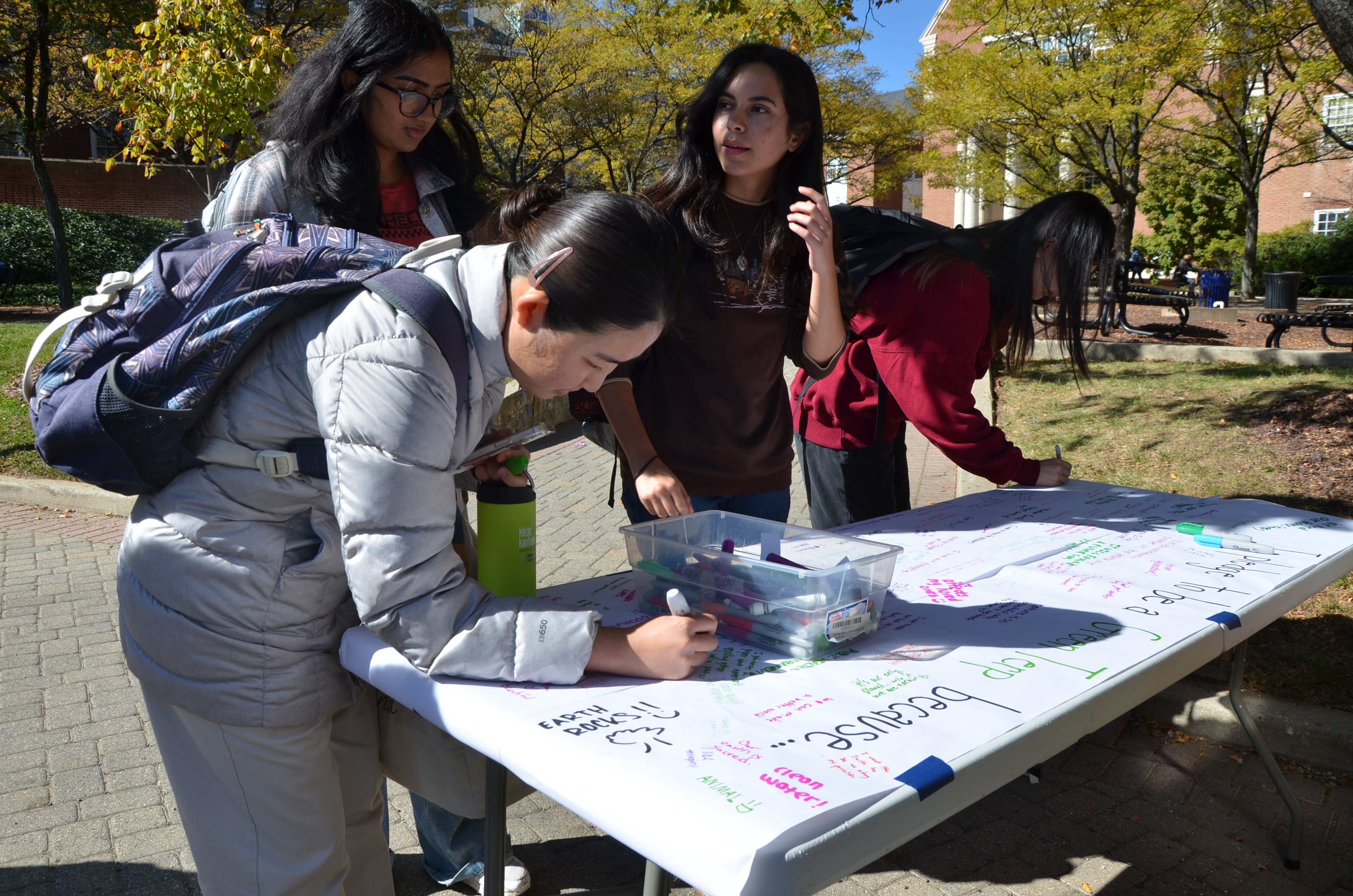
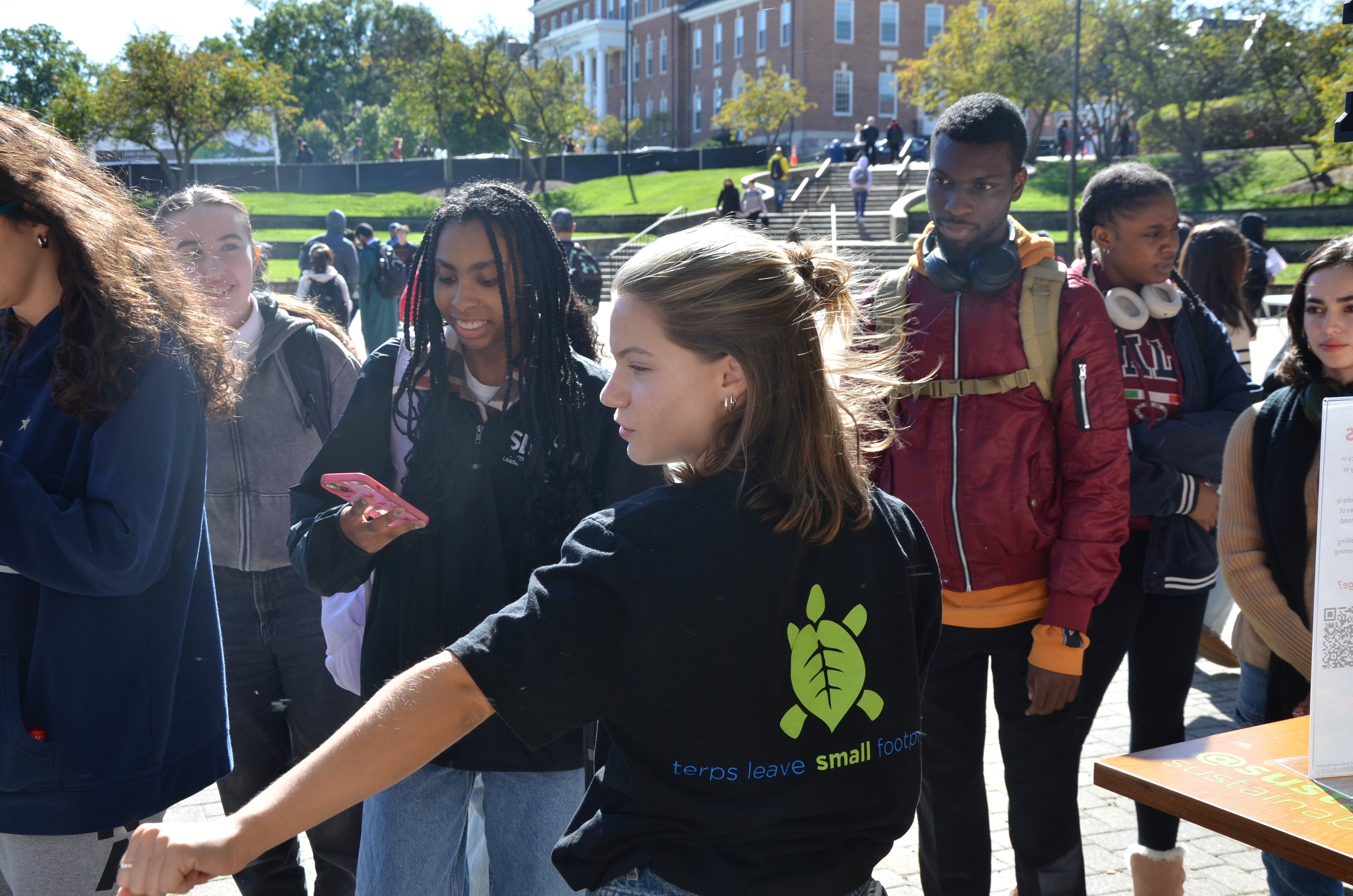
The Office of Sustainability hosted a Campus Sustainability Month event in partnership with University of Maryland Homecoming and the Department of Resident Life. Attendees learned more about topics such as climate emotions and climate justice while enjoying cotton candy, painting with soil and partaking in other educational activities.
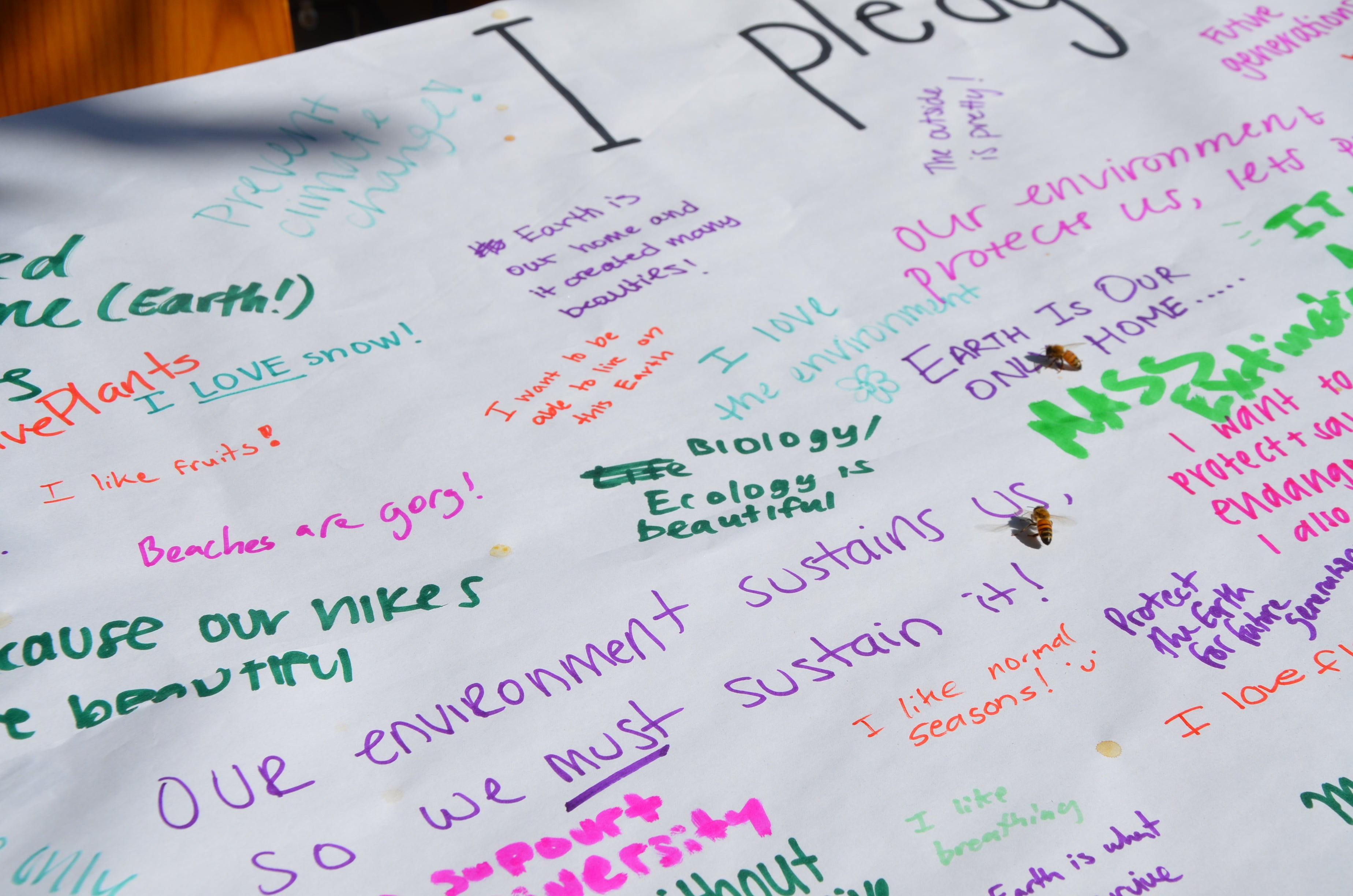
As part of the Office of Sustainability’s activity, students pledged to be Green Terps. They wrote messages on a pledge board creating a colorful collage of powerful messages that detail reasonings for being sustainable.
Some reasons written were, “Our environment sustains us, so we must sustain it,” “I want to be able to live on this Earth” and “We only have one Earth.”
To highlight Campus Sustainability Month, the Office of Sustainability also took to Instagram to post weekly reels about the four climate topics shared on the new climate action website.
Climate emotions are feelings that one experiences in response to the changing climate and the results of those changes. These could be the unease from learning about storms intensified by climate change or the joy from seeing flowers bloom in spring.
“I do what I can do to better the climate, to better the environment, using my own individual actions, and hope that others around me do the same,” said a student during an interview about their climate emotions.
Other students mentioned participating in sustainability events and being a conscious consumer through thrifting to cope with climate anxiety, a prevalent type of climate emotion. .
To cover the topic of climate justice, the Office of Sustainability interviewed some students and faculty on campus that study climate justice.
“Climate justice is about addressing the disparate impacts and the disparate causes of climate change,” said ENSP professor, Caroline Boules. “The people who are suffering the biggest impacts from the effects of climate change are not the people who are causing a lot of the actual changes to our climate.”
Organizations on campus are taking steps to improve climate justice through research and development of programs.
The School of Public Health’s Center for Community Engagement, Environmental Justice and Health (CEEJH) has implemented air quality monitoring systems that allow members of the community to use data from sensors to measure their air quality, according to Vivek Ravichandran. CEEJH uses the data to develop mitigation strategies for climate change impacts that disproportionately affect low-income and communities of color, such as the greenhouse gas effect and the urban heat island effect.
Michelle Wang, the communications director for 17 for Peace and Justice, said that she has seen more students advocating for climate justice, as well as a rise in grassroot organizations. On a global level, she has noted an increase in conferences and conversation surrounding climate justice, such as Justice 40, a government environmental justice initiative.
To explain one example of climate research, the Office of Sustainability highlighted the Bioenergy and Biotechnology Lab, run by ENST professor Stephanie Lansing. As part of this research, Dr. Lansing transforms waste into resources, such as energy, fertilizer and byproducts.
“Our processes use anaerobic digestion and other fermentation work to take something like food waste that would normally go into the landfill and turn into a valuable resource that reduces greenhouse gasses,” said Lansing.
Student interns and staff with the Office of Sustainability explained climate resilience as the ability to adapt to the impacts of climate change, by connecting it to UMD’s campus in an Instagram reel. At UMD, green infrastructure on campus, such as bioretention gardens, works to collect and filter stormwater, increasing the resilience of local resources.
The reel also explained how tree cover and green space throughout campus helps preserve biodiversity and diminish the urban heat island effect that occurs from large areas of paved surfaces.
The University of Maryland is performing restoration efforts by funding research of clean energy technology and working to reduce energy consumption through energy efficient fixtures and green building design.
Although Campus Sustainability Month is during October, students can partake in sustainable habits and events throughout the year. Every month can be Campus Sustainability Month if we continue to learn about these important issues, celebrate the strides that have been made and recognize the work that must still be done.