State-Level Goals
Guiding Commitments in Maryland
Maryland is at a pivotal moment where bold, coordinated action is necessary to protect the state’s environment and communities for present and future generations. As climate change accelerates, Maryland faces growing sustainability challenges, including coastal flooding, extreme heat, public health risks, and persistent environmental inequities that disproportionately impact frontline communities.
Read more about these impacts below.
Sea Level Rise
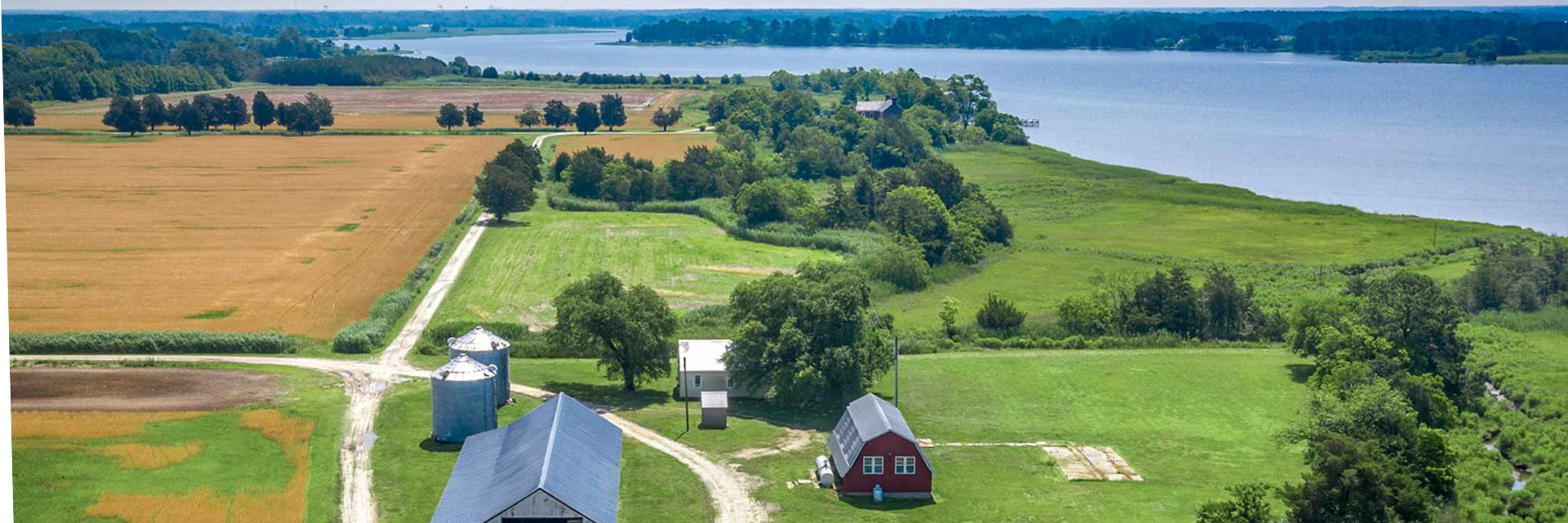
With more than 70% of Maryland residents living in coastal areas, the state is highly vulnerable to sea level rise and increasingly frequent 100-year flooding events. By 2035, rising seas in the Chesapeake Bay region could put 263,500 jobs at risk and expose $11.1 billion in wage income, while low-lying communities face flooding, shoreline erosion, saltwater intrusion, and habitat loss that threaten both livelihoods and ecosystems. The Resiliency through Restoration Initiative supports on-the-ground restoration projects that protect vulnerable communities from erosion, flooding, and other climate-driven shoreline impacts.
Extreme Heat
Maryland is experiencing rising temperatures, more frequent extreme heat events, and intensified urban heat-island effects. Since the early 20th century, the state’s average temperature has increased by approximately 2.5°F, with a growing number of days exceeding 95°F. High humidity and declining air quality heighten risks for vulnerable populations, including older adults, outdoor workers, and residents without reliable access to cooling. Maryland addresses rising heat risks through the Maryland Department of Health’s Extreme Heat Emergency Plan and workplace heat stress standards that protect vulnerable populations and outdoor workers.
Public Health
Climate change poses increasing risks to public health in Maryland by straining infrastructure, degrading air quality, and intensifying extreme weather. Flooding threatens drinking water systems and access to health services, while extreme heat drives heat-related illness and hospitalizations. Poor air quality further exacerbates asthma, cardiovascular disease, and other respiratory conditions, compounding health risks statewide. The Building a Healthier Maryland initiative aims to mitigate climate-related health risks by enhancing access to care, addressing behavioral health needs, and promoting community well-being statewide.
Equity and Community Resilience
Climate impacts are not experienced equally across Maryland. Low-income, historically underinvested, and geographically isolated communities often face greater exposure to flooding, extreme heat, and air pollution due to aging infrastructure, limited green space, and fewer resources. Building a sustainable future requires prioritizing resilience and ensuring that environmental progress benefits every community. Governor Moore’s VOICE Executive Order, alongside the Maryland Resilience Toolkit and tools like MDEnviroScreen, advances equitable climate resilience by targeting resources to communities facing disproportionate environmental burdens.
Toxins and Air Pollution
Despite significant improvements in air quality over the past 20 years, Maryland’s energy demand and industrial legacy continue to pose pollution challenges. Rising pressure to maintain coal-fired power plants or expand fossil-fuel generation risks increasing emissions of carbon dioxide, nitrogen oxides, and particulate matter, threatening both climate goals and public health. Continued investment in renewable energy, electrification, and emission-reduction technologies is essential to protect residents and meet state targets. The Maryland Healthy Air Act mitigates air pollution and public health risks by mandating reductions in nitrogen oxides, sulfur dioxide, and mercury emissions from large coal-fired power plants.
Food Insecurity
Maryland’s food system faces significant challenges driven by persistent socioeconomic pressures such as poverty, low wages, unemployment, inflation, and uneven access to affordable, nutritious food. As a result, 1 in 3 Marylanders experiences food insecurity, a challenge further intensified by extreme weather, flooding, and shifting precipitation patterns that affect crop yields and soil health. Efforts such as the Food Systems Resiliency Council aim to strengthen equitable access to food and build a system capable of withstanding future climate stress.
In response to these challenges, the Moore-Miller Administration's 2024 State Plan outlines ten overarching objectives grounded in the principle of leaving no one behind. Of particular relevance to the University of Maryland is Priority #9, Making Maryland a Leader in Clean Energy and the Greenest State in the Country. This priority closely aligns with UMD’s sustainability vision while expanding it through a strong emphasis on equitable climate resilience and environmental justice.
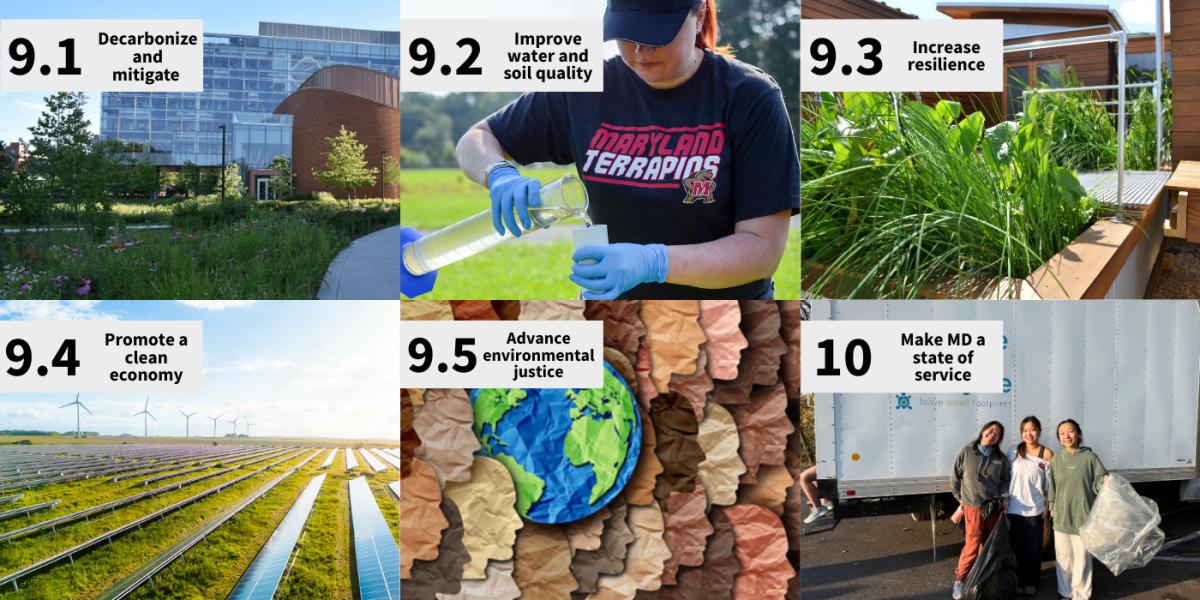
Priority #9 is supported by five key objectives:
Decarbonize and mitigate the impacts of climate change
Protect and improve water and soil quality to create a healthier environment
Increase resilience through adaptation
Promote a clean economy
Advance environmental justice
Together, these commitments provide a comprehensive framework for addressing climate, environmental, and social challenges across Maryland.
How These Goals Guide University Action
As Maryland’s flagship public university, UMD plays a critical role in advancing state sustainability goals through research, education, operations, and public service. The university aligns its sustainability initiatives with Priority #9 by supporting clean energy, resilience, ecosystem protection, and research that informs state and local decision-making.
In addition, Priority #10 of the State Plan, expanding experiential service opportunities for all Marylanders, particularly young adults and university students, reinforces UMD’s mission to prepare students for leadership in sustainability and public service. Through experiential learning, community partnerships, and applied research, UMD empowers students to contribute directly to Maryland’s climate and sustainability goals.
Together, these commitments form a comprehensive blueprint for Maryland’s sustainable future. By aligning its goals with resilience and equity, Maryland can serve as a model for how a state can drive measurable progress toward a cleaner, fairer, and healthier society.