
The Office of Sustainability’s first Clean Energy Education Intern, Abbey Vanasse, hosted a tour of several of the energy systems on campus. On November 11th, students and staff braved the wind to explore various stops along North Campus that featured multiple aspects of how our campus generates, distributes, and uses energy.
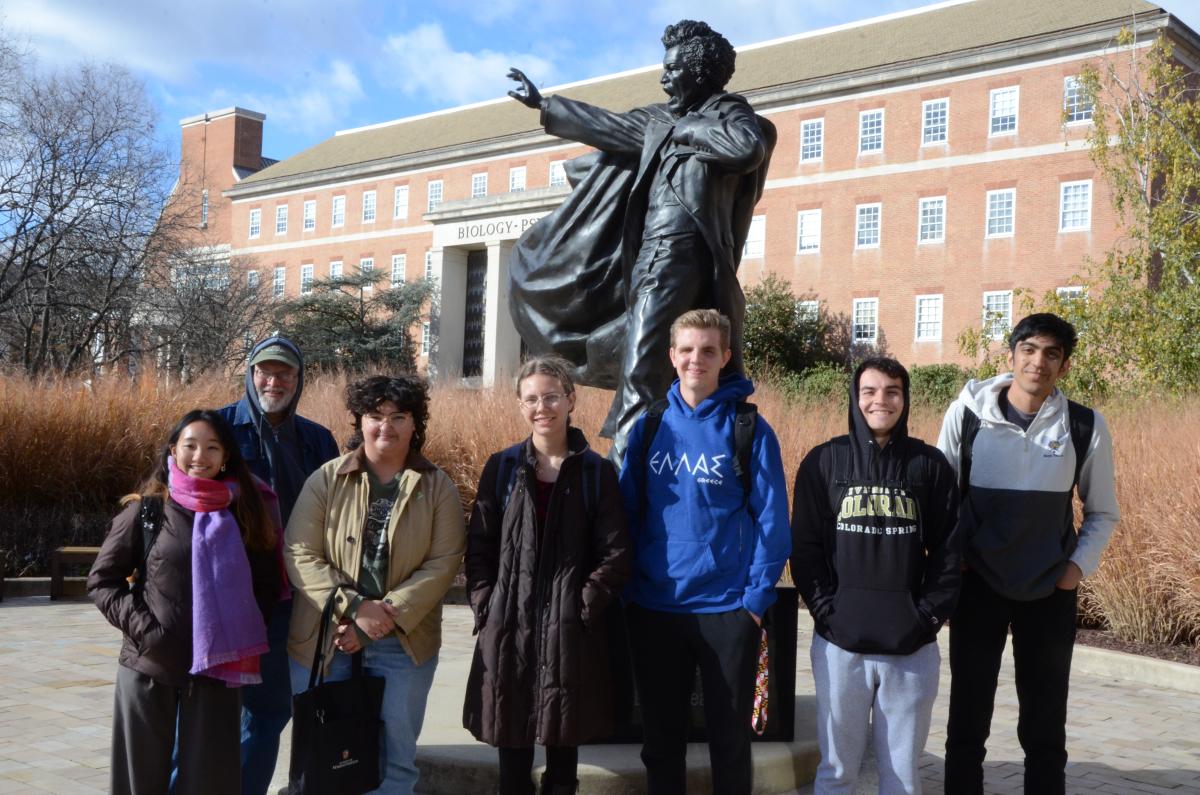
The meeting place to begin the tour allowed students to complete a Green Terp Bucket List item, which was visiting the Frederick Douglass statue in Hornbake Plaza. Douglass was one of the first public figures to align environmental topics with racial justice in his writings.
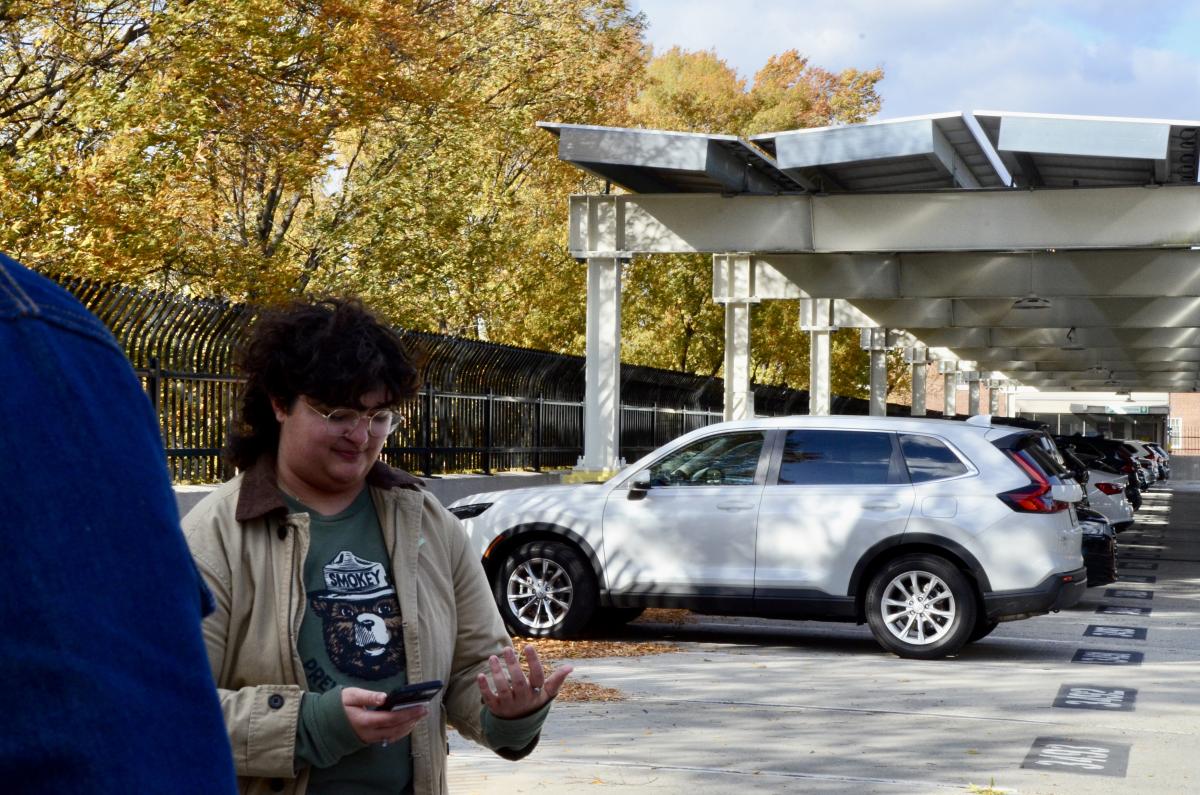
After this, everyone ventured to the top of Regents Drive Garage, which hosts more than 7,000 solar panels. Regents Drive, along with the Severn Building, Terrapin Trail and Mowatt Lane Garages feature 9,000+ panels that power our campus with renewable energy. UMD also purchases 100% renewable energy as a part of our Climate Action Plan to power our campus, and cogenerates power and steam to heat our buildings at the central energy plant on Baltimore Avenue.
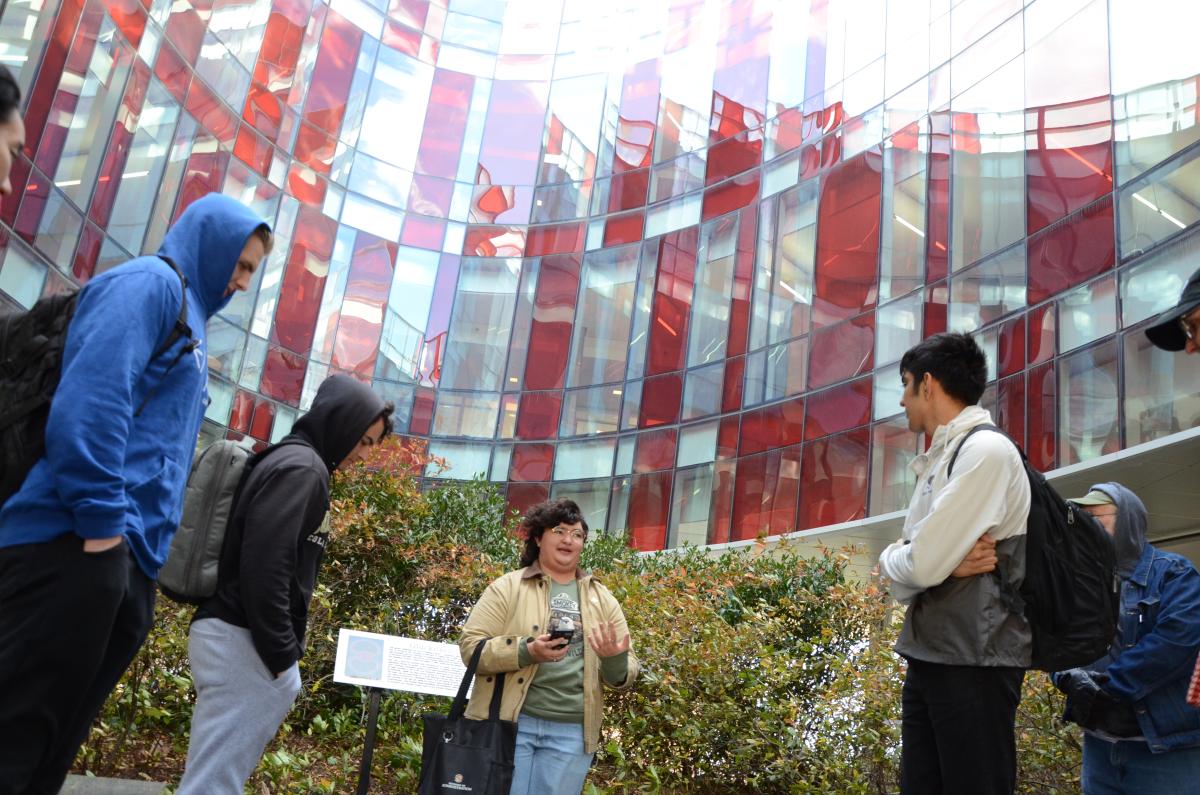
The next stop was right next door at the Physical Sciences Complex. The building features lighting control systems to reduce energy consumption when the building is unoccupied or when the light needed to illuminate the space is exceeded. For example, the courtyard in the middle is specifically designed to let in more natural sunlight. This reduces our need to use electric lights and keeps the building naturally warmer in the winter, saving on heating energy. These efficiency measures helped the building to achieve LEED Gold status. This building, along with 23 others on campus, have achieved at least a silver rating or higher for their water and energy efficiency, infrastructure, and environment quality.
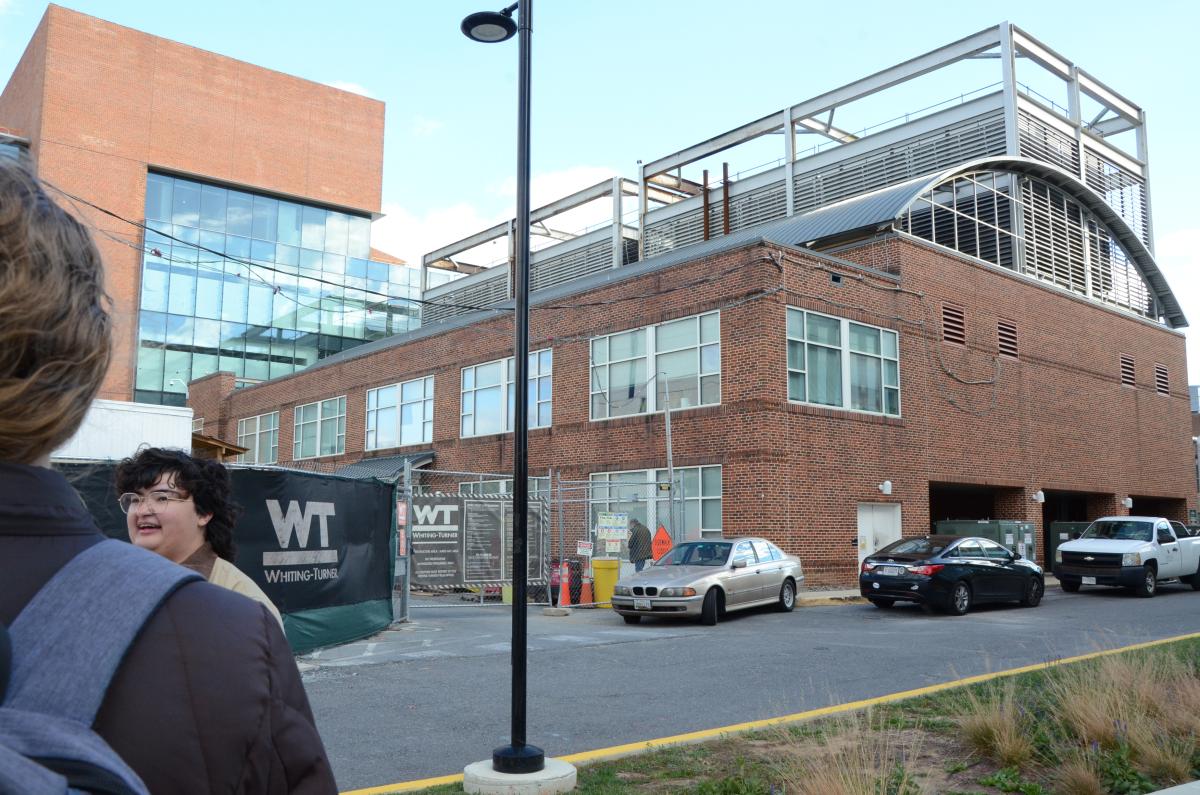
After a short walk down Stadium Drive, participants stopped in front of a seemingly unremarkable building, but on the inside, a highly efficient utilities control facility is housed there. The Satellite Central Utilities Building (SCUB) that we visited is one of five across campus that are part of the University’s central steam and chilled water distribution system. Each SCUB serves as a distribution point for heating and cooling to surrounding buildings. SCUB 4 specifically serves 18 major buildings, including over 2.5 million square feet of space!
This building also utilizes co-generation, or combined heat and power (CHP). Normally, when you make electricity at a power plant, a lot of the heat created is wasted and just vents out. Co-generation is a system that captures that waste heat and puts it to use. The SCUBs use this excess steam piped from the campus power plant to run special chillers that make cold water. It's an efficient way to get both hot and cold air, ensuring nearly all the energy from our fuel source is used, not wasted.
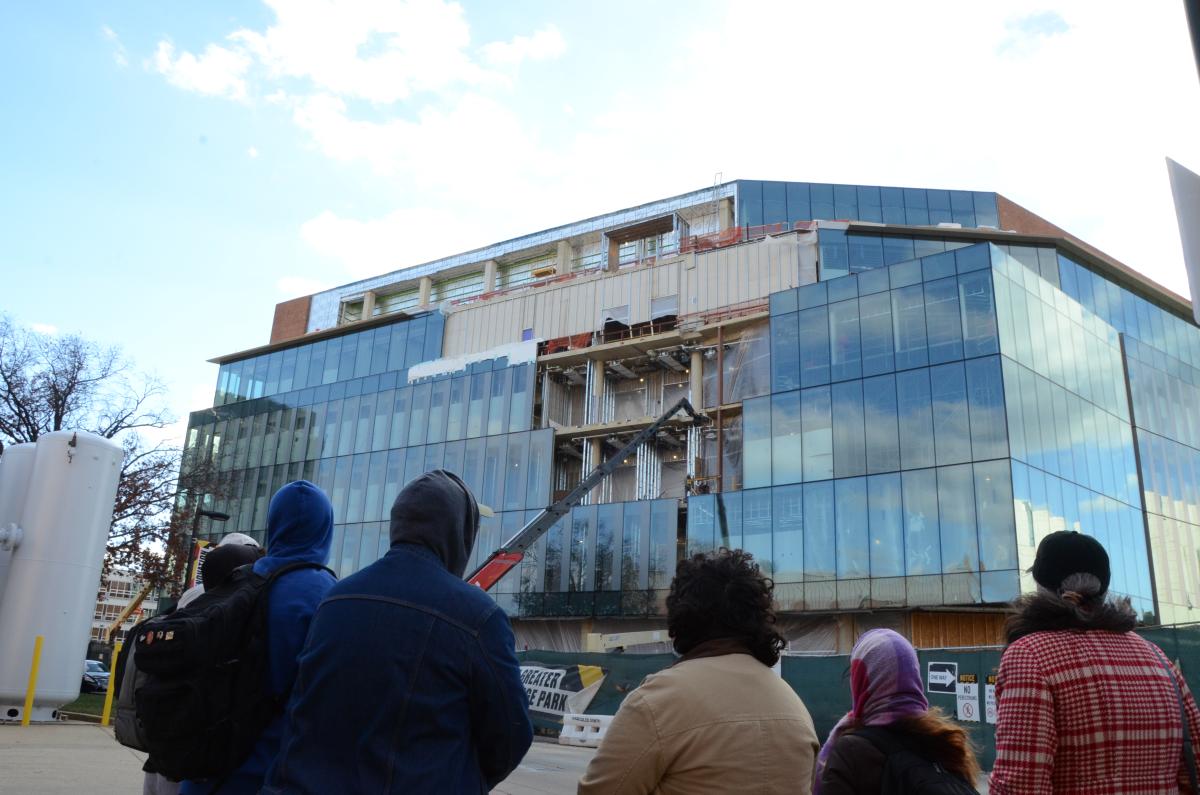
Right next to SCUB 4 is the last energy system featured on the tour, which is from one of our almost newly-finished construction sites. Zupnik Hall will generate heat by recovering it from the campus’ central utility plant. This will allow the building to achieve operational carbon neutrality, meaning there will be no net greenhouse gas emissions from its ongoing operations. The building will also feature a curving design and shading elements that will reduce the amount of solar heat gain. This will reduce the energy needed for air conditioning by a significant 25%. All of these measures will help the building to reach LEED Gold for its sustainable design.
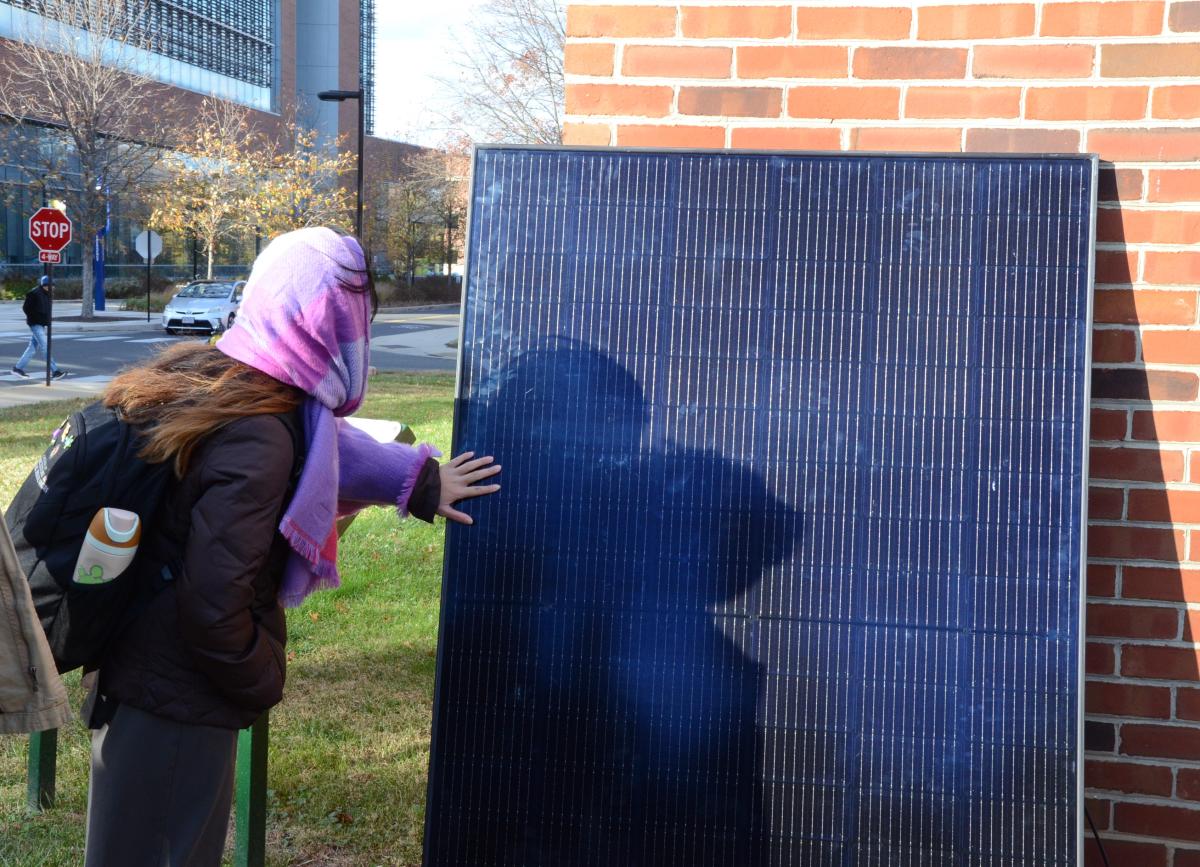
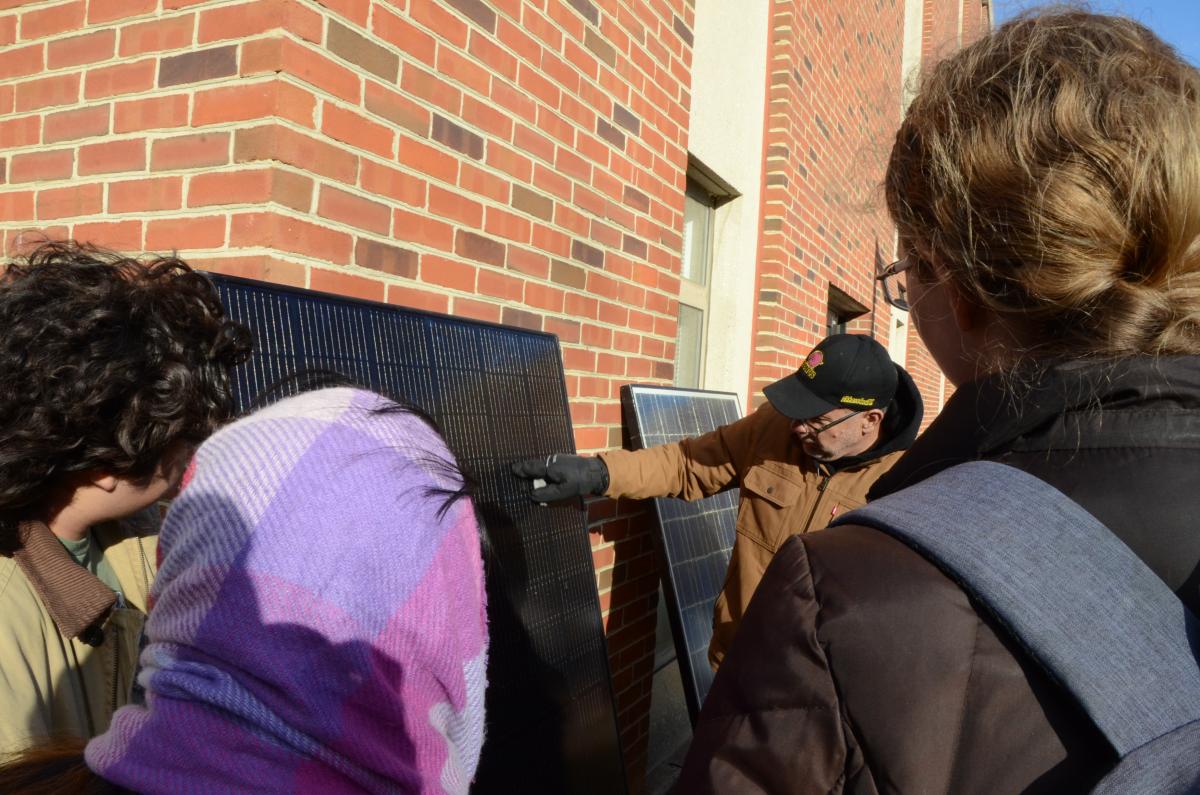
The last stop was right outside of the A.V. Williams building, which hosts a multitude of research labs, but one that was featured in particular for the tour. The Maryland Educational & Sustainable Activities (MESA) Lab, directed by Bryan Quinn, is a hub for energy research. Through his work with the MESA Lab, he has led a unique facility concentrating on energy education and research for over 15 years. Quinn, along with student researchers, have developed projects in the areas of microgrids, hybrid power generation, increased efficiency for localized power generation, energy saving products for home use, and as demonstrated on the tour, outreach programs to educate on the generation and use of sustainable technologies. Quinn showed us the differences between the old solar panels that were previously being used for research, and the new ones that were provided as part of a grant from the Maryland Energy Administration to be used for teaching purposes.
In efforts to expand the reach of the energy systems tour, it is being offered again on April 21st as a featured event during DC Climate Week occurring at UMD. Additionally, an interactive, digital map will also be developed and hosted on the SustainableUMD website to allow the public to read and learn about campus energy infrastructure virtually.