
Each morning, UMD students are confronted with the painstaking question of what to wear. Should they bring an umbrella? Will they need to pack a jacket to contend with the ever-changing Maryland weather? Should they grab a pair of sunglasses?
These questions have an easy answer: look at the weather forecast from Mesoterps, a student-run organization in the Department of Atmospheric and Oceanic Science.
What is Mesoterps?
College Park contains microclimates, meaning that temperatures and atmospheric pressures fluctuate across campus. For example, the UMD Golf Course may be multiple degrees cooler than outside the Atlantic Building. Mesoterps is working to understand what may be influencing these deviations, including localized infrastructure and terrain.
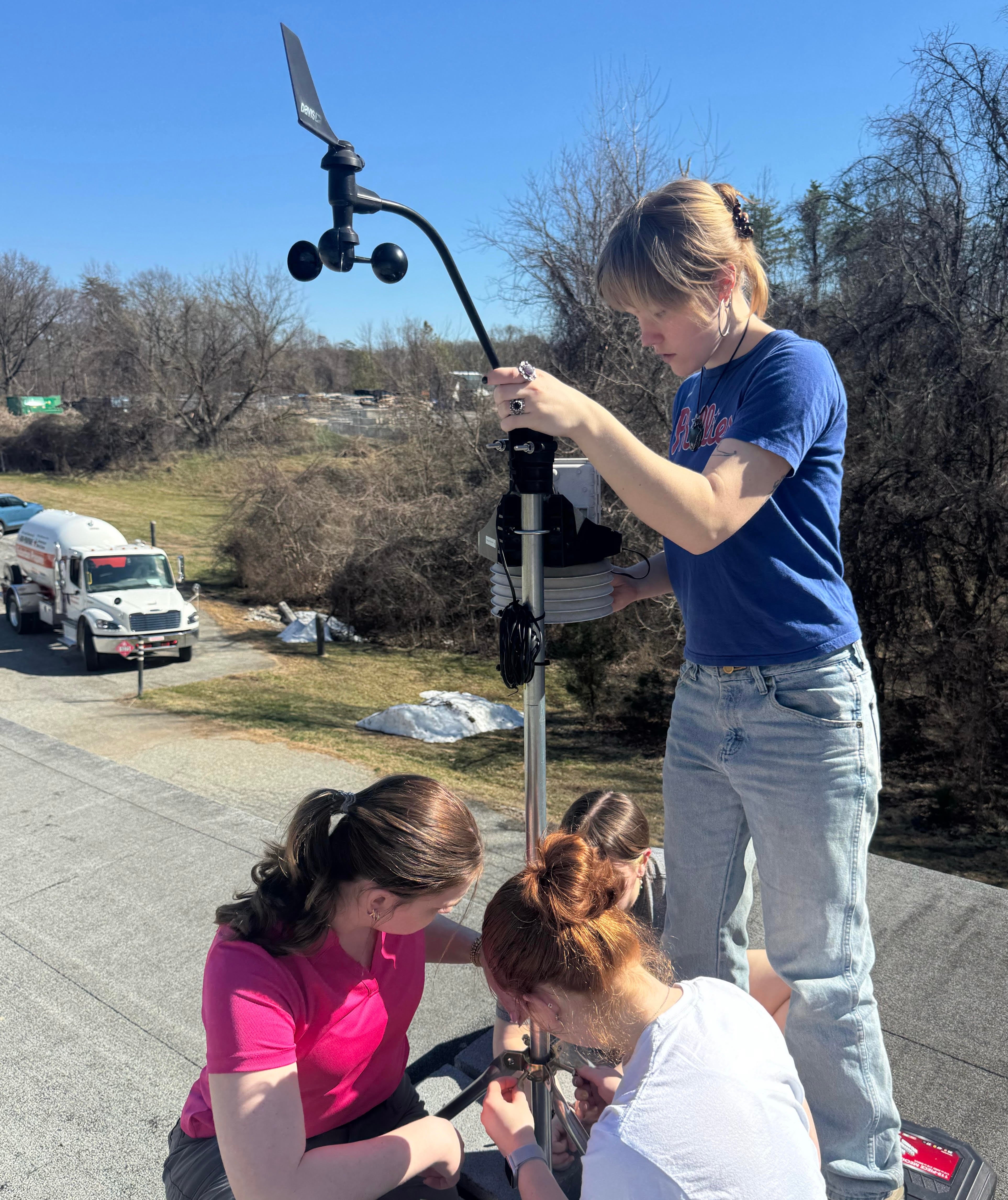
Mesoterps first began after receiving a donation of a few thousand dollars to purchase five weather stations. Soon after, they built a website, deployed five sensors, and acquired a Sustainability Fund Grant in 2024 to purchase additional weather stations and a new server.
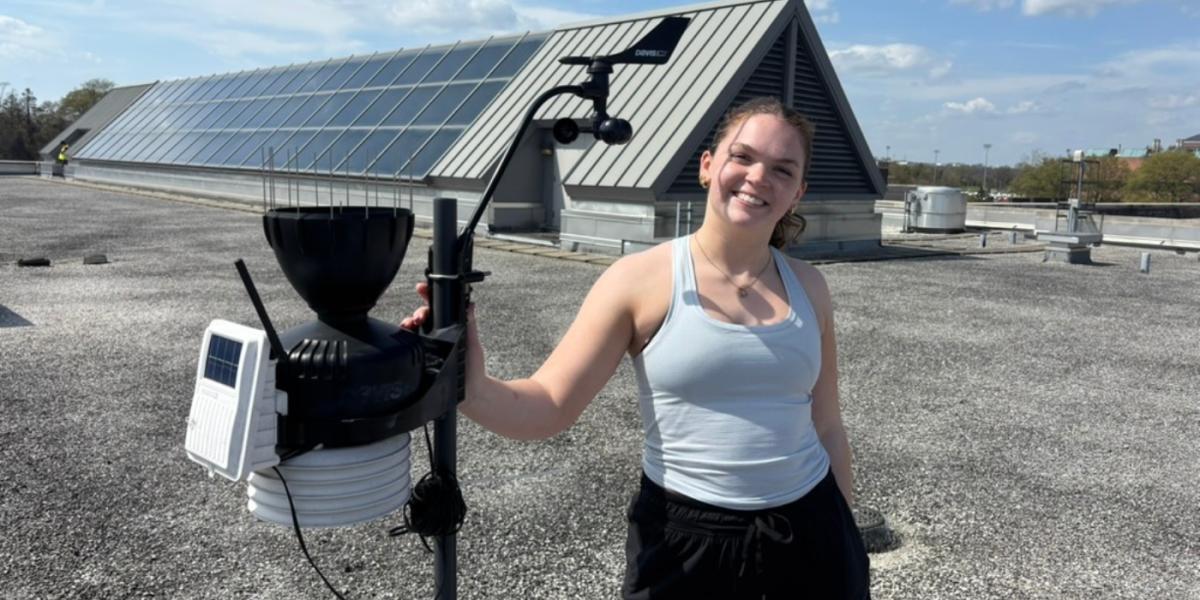
Currently, they operate nine stations across campus with sensors collecting data on temperature, humidity, wind speed and direction, rainfall, and barometric pressure. The data collected is funneled to Mesoterps’ server where it’s collected, processed, and analyzed. These stations form a micronet, or a network of weather observation stations, on UMD’s campus. With the information from this micronet, students in Mesoterps can publish observed weather conditions and forecasts, upholding their motto of providing “Maryland Weather for Maryland Students.”
Besides these nine stations, there are numerous atmospheric instruments overseen by Mesoterps: carbon dioxide sensors, a black bulb globe thermometer, and air quality sensors. On a daily basis, these stations provide data that can assist everyone from athletes to individuals with respiratory issues. Specifically, black bulb globe thermometers can lower the risk of athletes overheating by measuring heat stress while air quality sensors can protect those with respiratory conditions–such as asthma–from harmful particulate matter levels.
Benefit to UMD
Mesoterps partners with Facilities Management (FM), sending them invaluable data recorded on their stations. Currently, junior Allison Fenley is leading a combined effort with Mesoterps and FM to determine where UMD’s storm sewer system is becoming overwhelmed, which can cause severe flash flooding after a major storm. With this additional information, FM will be better prepared to alert the UMD community of any possible dangerous areas prone to flooding.
FM staff aren’t the only ones who benefit from Mesoterps’ data. On the UMD app, students can easily access hyperlocal weather conditions across campus to help them decide what to wear to class or check if rain will prevent them from playing volleyball on La Plata Beach. The UMD app shows the locations of the nine different stations, educating users about the behind-the-scenes technology.
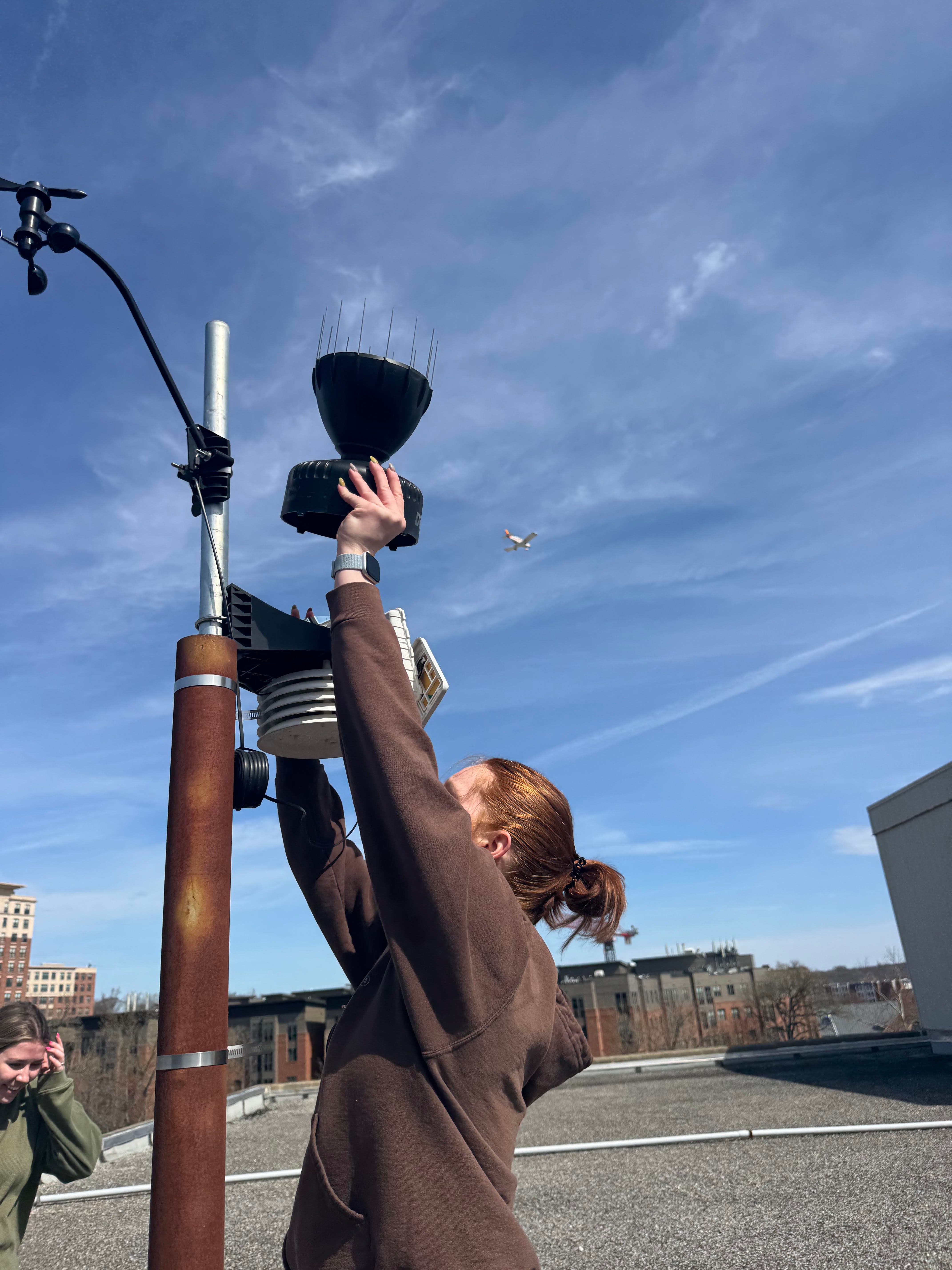
“Containing our network to College Park specifically is still a value of ours because we want our data to be as relevant to the UMD community as it can be,” Fenley explains.
The project has also enabled numerous students, like Fenley, to gain hands-on experience with atmospheric monitoring and data analysis.
Looking back at when she first joined Mesoterps, Fenley admits, “I didn’t know what a lot of the instrumentation that we used was even called, much less how to deploy it…maintain it…do any of the software, [or] any of the data processing.” Now, Fenley serves as the Student Project Manager for the organization.
Whether it is learning how to handle tremendous amounts of data, conducting biannual maintenance on weather stations, or creating a weather forecast, students from different majors learn invaluable skills that cannot be taught in a classroom. These skills are taught by students to other students with the assistance of Mesoterps’ faculty advisors.
“Sometimes you would run into a problem that nobody had the answer to,” Fenley reflects. “I was in a comfortable enough environment of the university setting where you’re allowed to make mistakes…I really learned quickly how to approach a problem from ground level.”
The Next Forecast
This year, Mesoterps is looking to launch several new projects. They recently acquired instrumentation to build a lightning sensor network on campus, which will identify the precise location and intensity of lightning strikes. Mesoterps will have quicker access to more reliable storm information, ensuring UMD students also receive faster notice of lightning and storms nearing College Park.
In October, the Mesoterps team plans to deploy air quality sensors on roofs across campus to examine particulate matter levels. This data will be used to determine if and why air quality differs across campus. These sensors can also track UMD’s progress towards a cleaner and safer campus by studying air quality fluctuations that might result from sustainable initiatives like the new electric Shuttle-UM buses.
Mesoterps is just one of many organizations that have received a grant from the Sustainability Fund. This year, around $680,000 is available through the UMD Sustainability Fund to support environmental initiatives and research by students and faculty. Apply for a 2026 Sustainability Fund grant by the October 15th priority deadline or by January 15th. Smaller projects looking for grants less than $2,000 can apply for a Sustainability Mini-Grant.
For those considering applying, Fenley reiterates the importance of finding faculty who are just as enthusiastic about a project as the students are to help get “any kind of project off the ground.” She acknowledges, “Students are students. We’re still learning.”