
Article by Vivian Maneval ‘27
Think UMD’s influence ends at the boundaries of College Park, or even the United States? Think again. From China and Indonesia to India and Mexico, the Center for Global Sustainability (CGS) works across borders to advance climate solutions worldwide through rigorous research, open data, policy engagement, education, and international collaboration.

Founded 10 years ago by Professor Nate Hultman, CGS was originally envisioned as a research institute to support implementation of the Paris Agreement, the international treaty adopted in 2015 to limit climate change. Since then, it has expanded to a vast portfolio of projects. Its work is strengthened by the diverse network of student researchers at the University of Maryland, and CGS continues to seek students from various disciplines who are committed to addressing global environmental challenges. Today, CGS celebrates a decade of impact!
What is the Center for Global Sustainability?
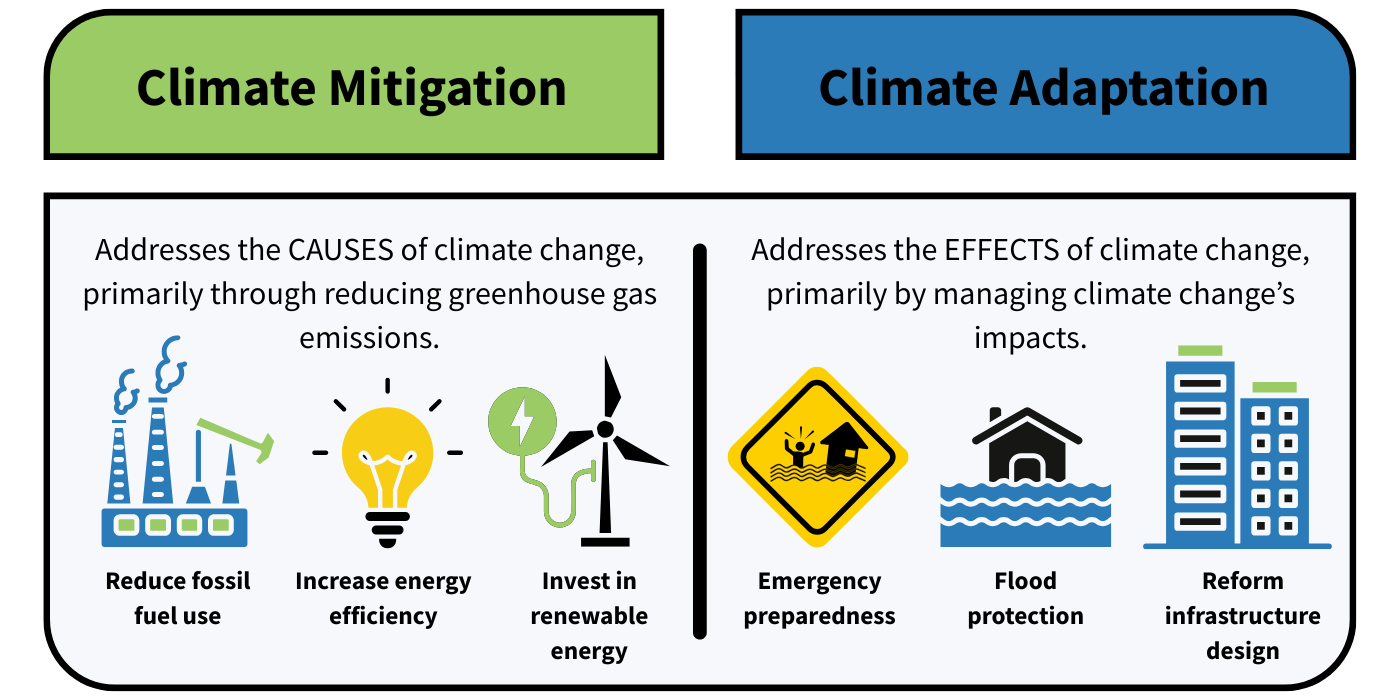
The Center for Global Sustainability is a research center at the University of Maryland that produces high-quality, policy-relevant research on climate mitigation, sustainability, and the global energy transition. Climate mitigation refers to efforts to reduce greenhouse gas emissions at their source, such as carbon dioxide and methane, that contribute to climate change.
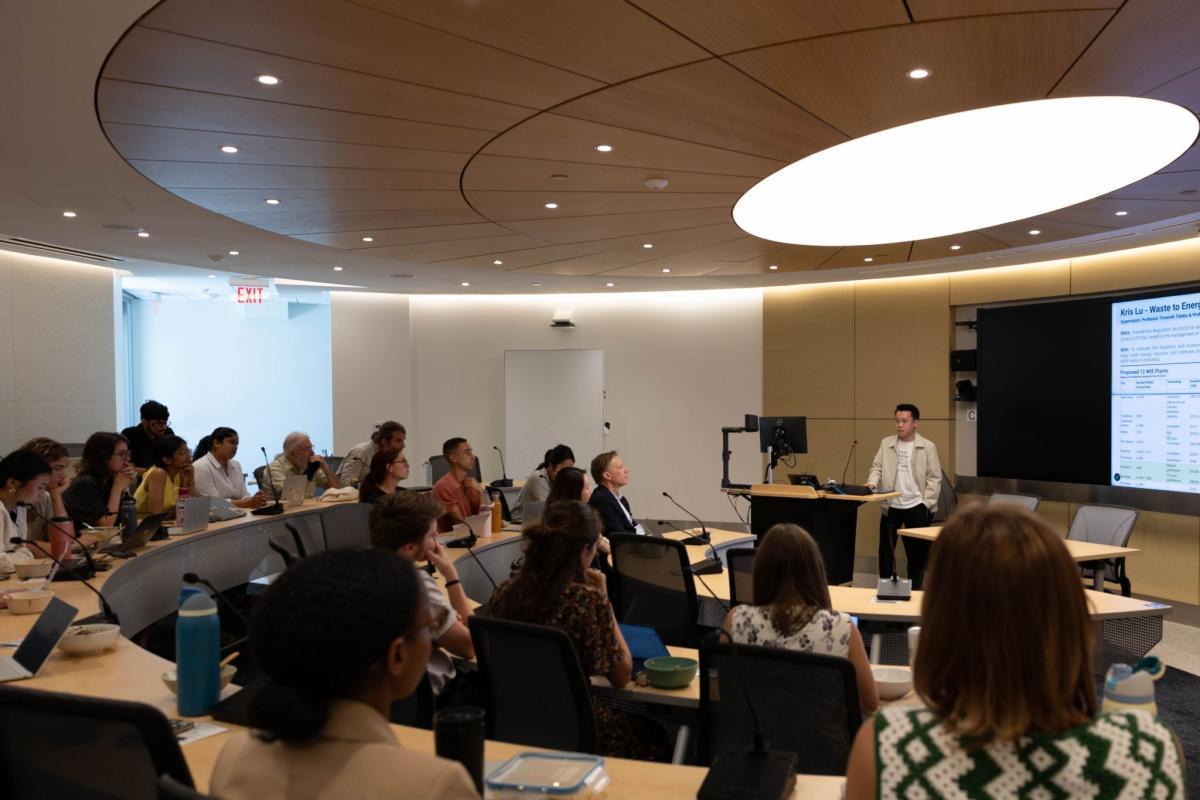
CGS brings together nearly 100 staff members, including full-time, joint faculty appointees, and student research assistants based in Thurgood Marshall Hall. Beyond College Park, CGS operates major programs in the United States, China, and Indonesia, with additional work in Brazil, India, Korea, Australia, Canada, Mexico, South Africa, and others.
What Does CGS Do?
CGS focuses primarily on climate mitigation, identifying and evaluating highly ambitious strategies to reduce emissions and limit global temperature rise to 1.5℃, the threshold scientists say would significantly reduce the most severe climate impacts.
Its research addresses:
- Phasing out fossil fuels that contribute to global warming
- Accelerating the transition to renewable energy sources like wind and solar
- Promoting equity and societal benefits associated with the transition
- Reducing methane and other non-CO2 greenhouse gases
CGS works at subnational (state and city), national, and international levels. Its research helps inform policymakers, government agencies, and international institutions. At the national level, CGS has supported countries in setting targets for their 2035 Nationally Determined Contributions (NDCs), formal climate action plans submitted under the Paris Agreement. NDCs outline how each country intends to cut emissions and adapt to climate impacts.
For example, India’s NDC through 2030 included three major goals: lowering emissions, expanding electrification and renewable energy, and increasing forest cover to absorb carbon. Because these national plans guide real-world policy and investment decisions, they play a major role in how quickly the world responds to climate change. CGS’s role is essential because it helps ensure that these plans are realistic, ambitious, based on strong evidence, and will translate into meaningful action.
How Does CGS Conduct Its Research?
With such a wide range of projects, CGS uses several research methods and often spends one to two years building a single dataset. These datasets are usually shared as public webpages or interactive resources that present complex information in a clear, user-friendly way. Student research assistants play an important role in this work and gain hands-on experience in research and data analysis along the way.
CGS’s primary research approaches include:
- Integrated Assessment Modeling: Advanced models that combine economics, energy systems, social and environmental data to simulate interactions between development, policies, and environmental impacts.
- Empirical Research: Involves analyzing real-world data to identify trends and what patterns are emerging.
- Mixed-Methods Research: Integrates quantitative (numerical) and qualitative data (interviews, case studies, etc.) to produce a fuller picture of complex issues.
- Large Inter-Model Comparisons: Comparison of results from multiple research models to identify areas of consensus, misalignment, and room for improvement.
All CGS datasets are shared in open-access, easy-to-use formats. This ensures that governments, universities, think tanks, and individuals worldwide can readily use and apply the research to guide climate decisions.
A few examples include:
The Country Climate Ambition Project
An interactive platform with data-driven analyses of an initial set of twelve countries’ emissions reduction pathways aligned with national and global climate targets. The resource offers tailored recommendations to countries on how to best reduce emissions and plan for climate change impacts.
The Indonesia Industrial Park Database
A comprehensive dataset mapping 144 industrial parks across Indonesia, developed in collaboration with local research teams. It includes detailed information to assess impacts on surrounding communities and Indonesian energy systems.
The Nickel Smelters Database
A database covering over 100 nickel smelting facilities, which are energy-intensive industrial operations central to meeting the global demand for electric vehicle batteries. Given Indonesia’s large nickel reserves, understanding the carbon footprint of these facilities is critical.
Partnerships, Policy, and Priorities
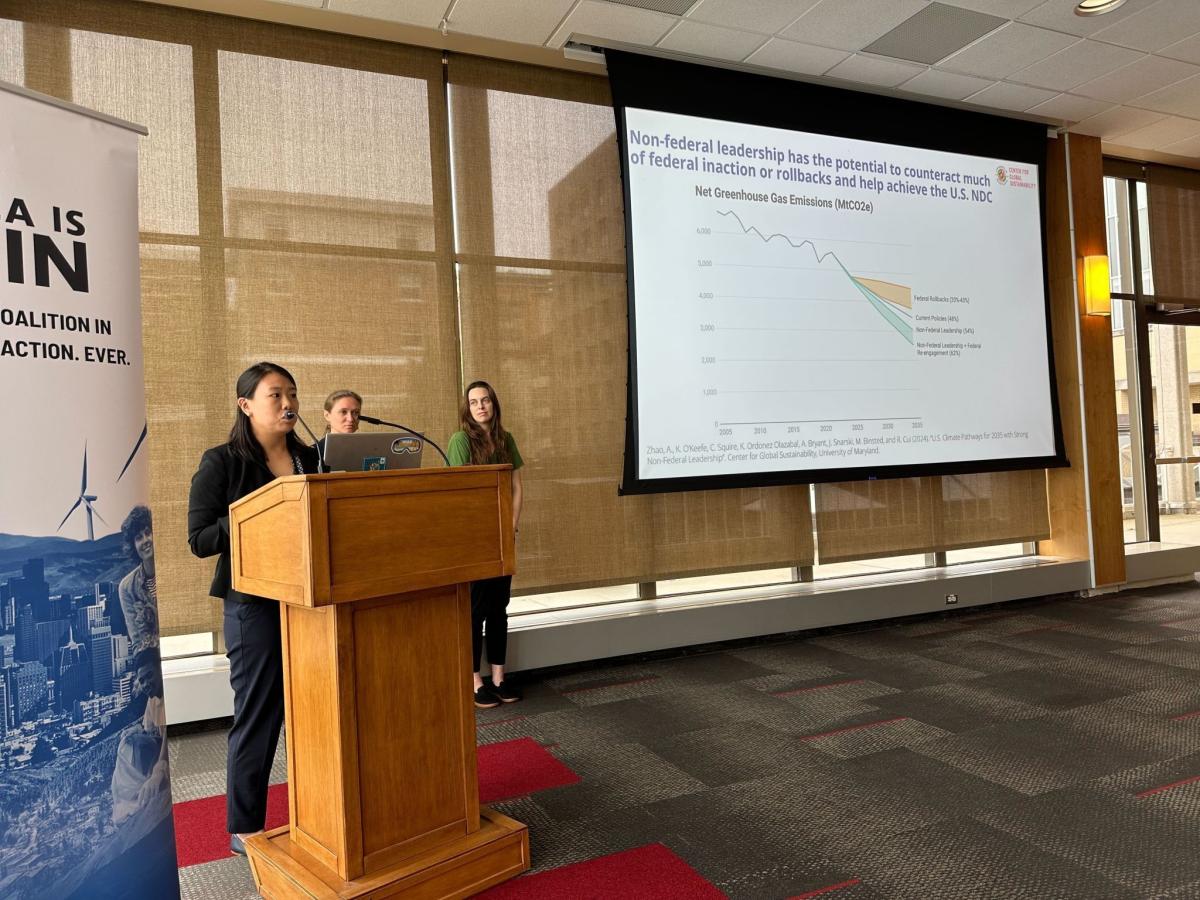
CGS maintains strong partnerships at multiple levels. They inform U.S. state-level policymaking, contribute to national climate discussions, and collaborate internationally with research institutions, policy stakeholders, and international organizations such as the United Nations Secretary-General’s office. CGS researchers also host and participate in events and conferences, including the annual United Nations Framework Convention on Climate Change Conference of the Parties (COP), where climate negotiations occur.
A growing priority for CGS is climate action at the subnational (regional, state, and city) level. Even when progress at the federal level slows, states and cities still have the power to shape policies on energy, transportation, and infrastructure. CGS directly supports U.S. state agencies in developing climate plans and works with a coalition of states committed to cutting emissions. The premise is simple: state improvements add up to overall country progress.
For Maryland, this means leaders have access to clear, research-based information to guide decisions about clean energy, public transit, and building efficiency. For the University of Maryland, it strengthens the university’s role as a leader in climate research and gives students opportunities to work on projects that connect directly to real policy decisions.
Looking ahead, CGS priorities include:
- Refining detailed policy pathways to help countries meet their Nationally Determined Contributions (NDCs)
- Tracking country progress toward their stated emissions commitments
- Measuring the added societal benefits of climate action
These added benefits, called co-benefits, include economic growth, job creation, energy affordability, and improvements in public health. By showing that climate action improves people’s daily lives, CGS makes the case that climate solutions are practical, achievable, and worth investing in.