With every year, it becomes more apparent that waste minimization is a pressing global issue. The University of Maryland has partnered with waste management systems throughout the DMV area to create opportunities to recycle and compost university waste and minimize landfilled waste. Over ten years, UMD Facilities Management successfully implemented mini-bin, compost, and recycling programs, reducing individual waste generation by more than 47% and institutional waste generation by over 43%. The recycling and composting programs in particular continue to play an important role in the campus’s waste management system as they help repurpose diverted waste materials into valuable products. To ensure these waste management systems are effective, individuals must appropriately sort and clean waste before disposal.
With opportunities across campus to compost, recycle, and donate, every Terp can positively impact campus waste minimization and diversion. Explore UMD’s waste management system to learn how each member of the UMD community will drive the next era of waste minimization at UMD:
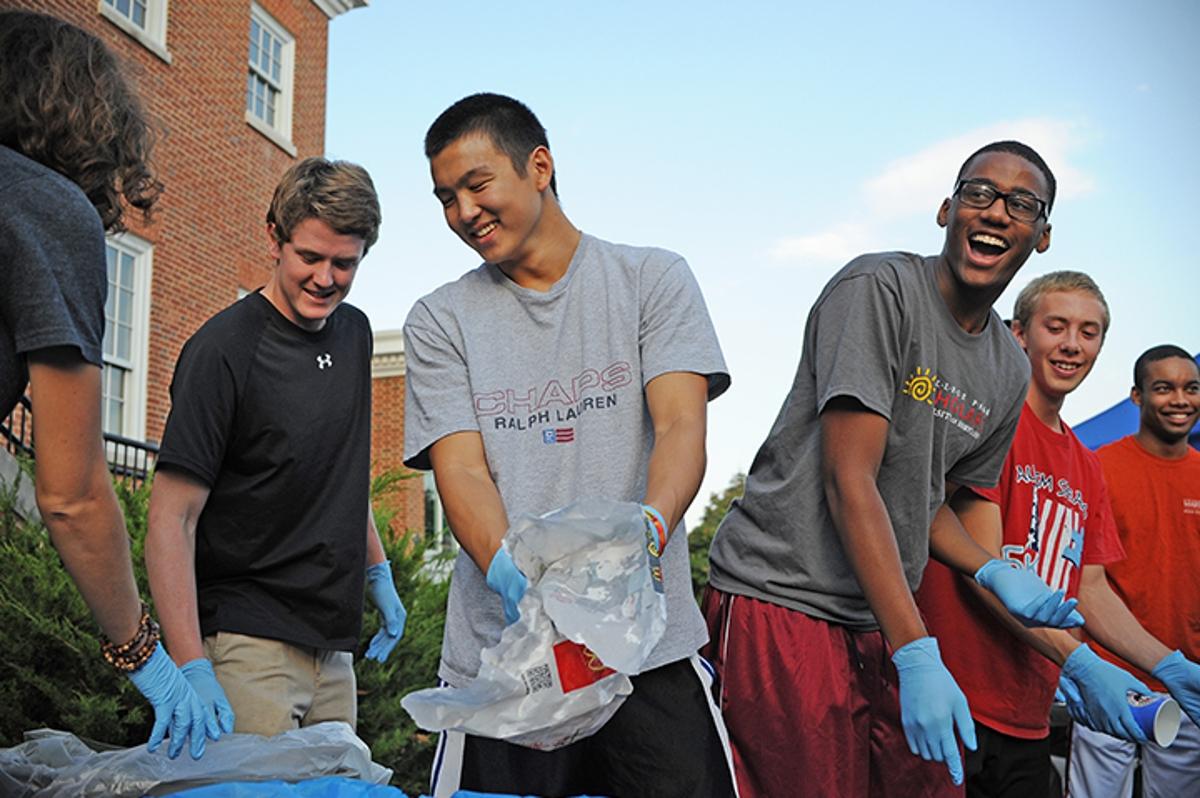
Terps minimize waste at UMD by reducing, reusing, recycling, and composting.
Every day, individuals make decisions to reduce their waste. The University of Maryland sustainability program supports tens of thousands of individuals to make low-waste decisions on and off campus. When thousands of individuals make sustainable choices consistently day after day, the cumulative impacts are tremendous.
The Sustainability Fund and Student Facilities Fund installed over 100 refillable water bottle stations throughout campus enabling Terps to easily reduce use of disposable water bottles. Through the Green Terp Program, students receive reusable utensils or straws to reduce reliance on disposable options. Through Ocean-Friendly Campus, students are able to avoid single use plastics with incentives and compostable alternatives offered by Dining Services. In three years, UMD provided over 700 reusable utensil sets, provided 14,000 reusable bags, and avoided the use of more than 4 million plastic water bottles on average.
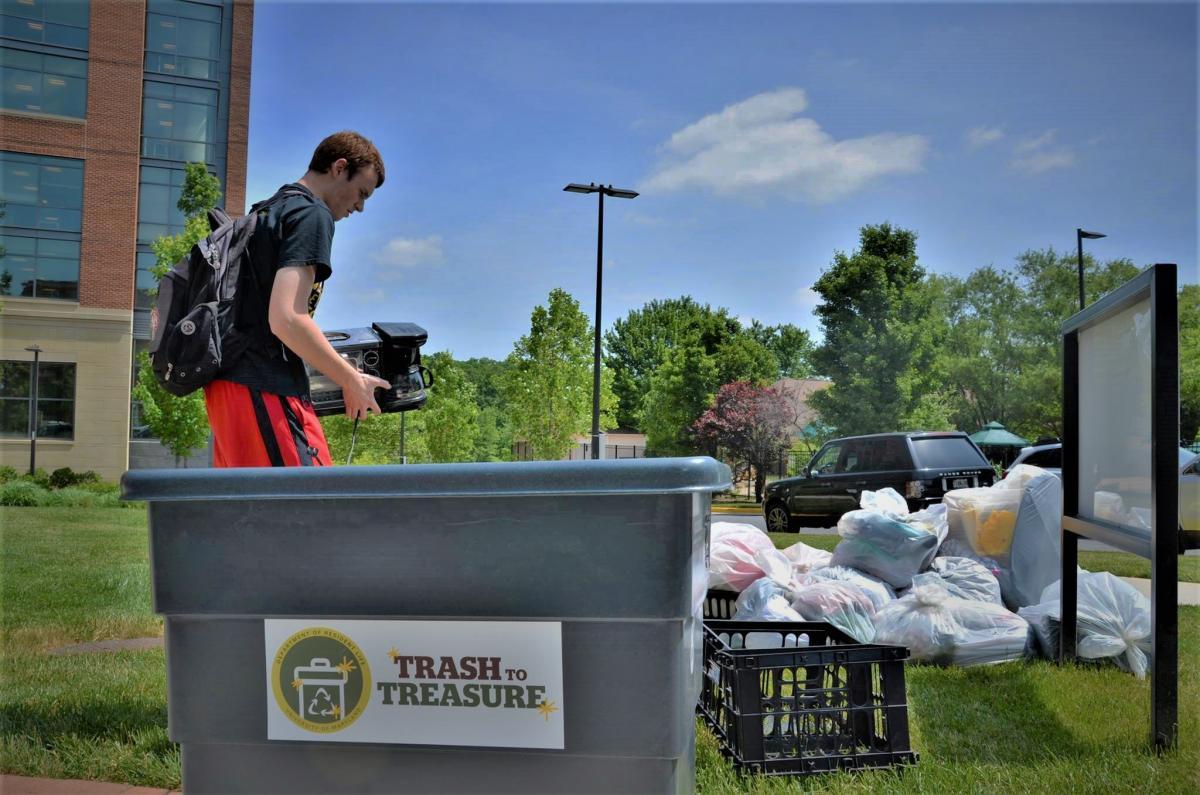
Donation programs drive reuse and provide access to resources.
Donating gently used items to campus programs such as Terp to Terp Campus ReUse Store, Terps Move-Out Donation Drive (formerly Trash to Treasure), and Terrapin Trader prevents waste while connecting individuals to accessible and sustainable resources at no- or low-cost. In the last decade, the Donation Drive alone has prevented more than 80,000 pounds of waste. Programs that recover surplus food and collect food donations like UMD’s Campus Pantry and the Food Recovery Network prevent food waste while alleviating hunger and food insecurity. Since 2014, the Campus Pantry has served more than 34,600 visitors and the Food Recovery Network has repurposed more than 210,000 pounds of potential food waste as meals for communities in need.
Lisa Alexander, Coordinator of Sustainability Programs for the Department of Resident Life, stated, “Programs and resources like Terp to Terp, Campus Pantry, and Residential Life’s Move Out Donation Drive are important because they involve our community members in supporting essential needs while establishing social responsibility in connection to waste diversion. These programs are vital to the creation of sustainable communities that prioritize basic human needs.”
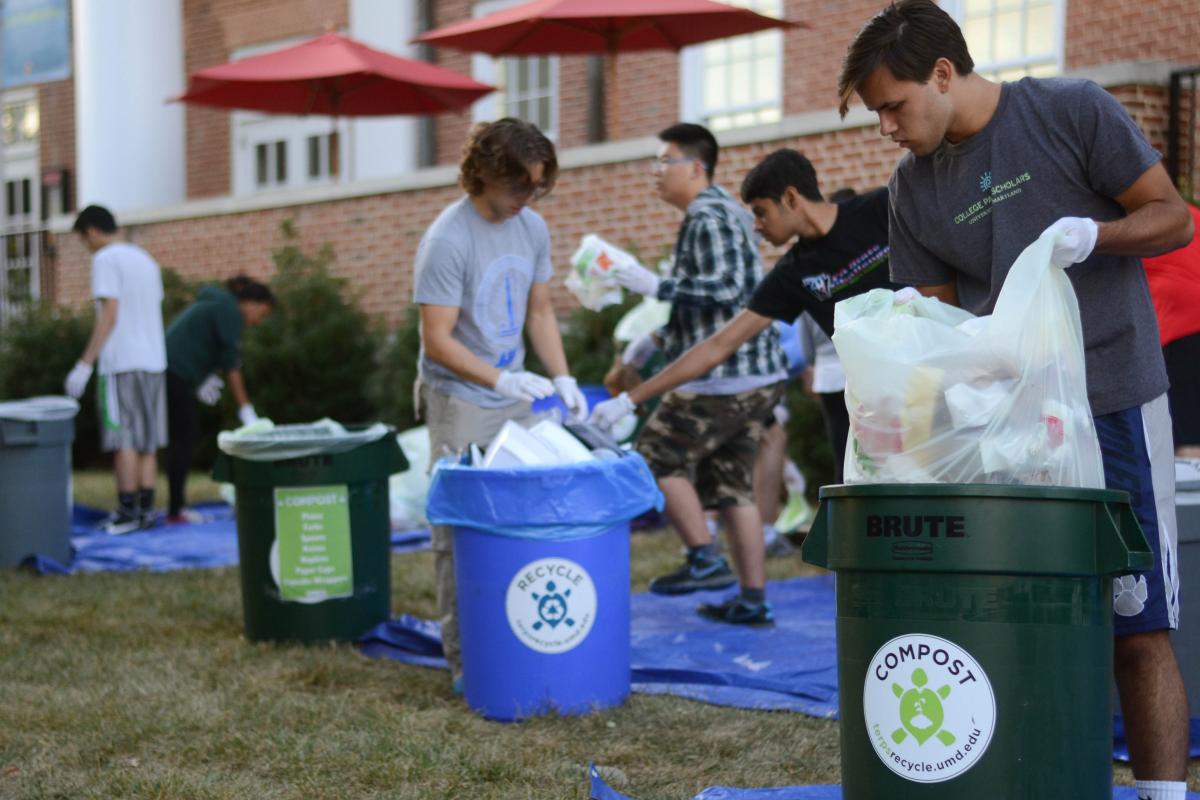
By recycling and composting, Terps impact the environment and economy.
Numerous staff play a role in waste management at UMD. According to the UMD Recycling website, the university has five trash and recycling drivers, three recycling personnel, and many staff in Building Services, Residential Facilities and Grounds Maintenance to empty indoor and outdoor bins. Housekeeping and building maintenance teams also support indoor composting, recycling, and other waste collection. Composting, recycling and generally managing waste helps to create jobs that have a positive impact on the environment, society, and economy.
The university prioritizes working with vendors that repurpose and reintroduce recycled waste as inputs for other economies. Glass bottles collected in purple bins around campus and converted into sand for use in construction and other industries. Campus food and organic waste is composted into LeafGro, a nutrient rich soil amendment used in gardens, landscapes, and farms of all sizes. At UMD, we also support industries that create products from recycled materials whenever possible with our environmentally preferable purchasing practices. Offices participating in the Green Office program commit to purchasing recycled materials such as paper, ink toner, and furniture. By properly sorting your waste, you contribute to diverting waste away from landfills and back into valuable items and materials.
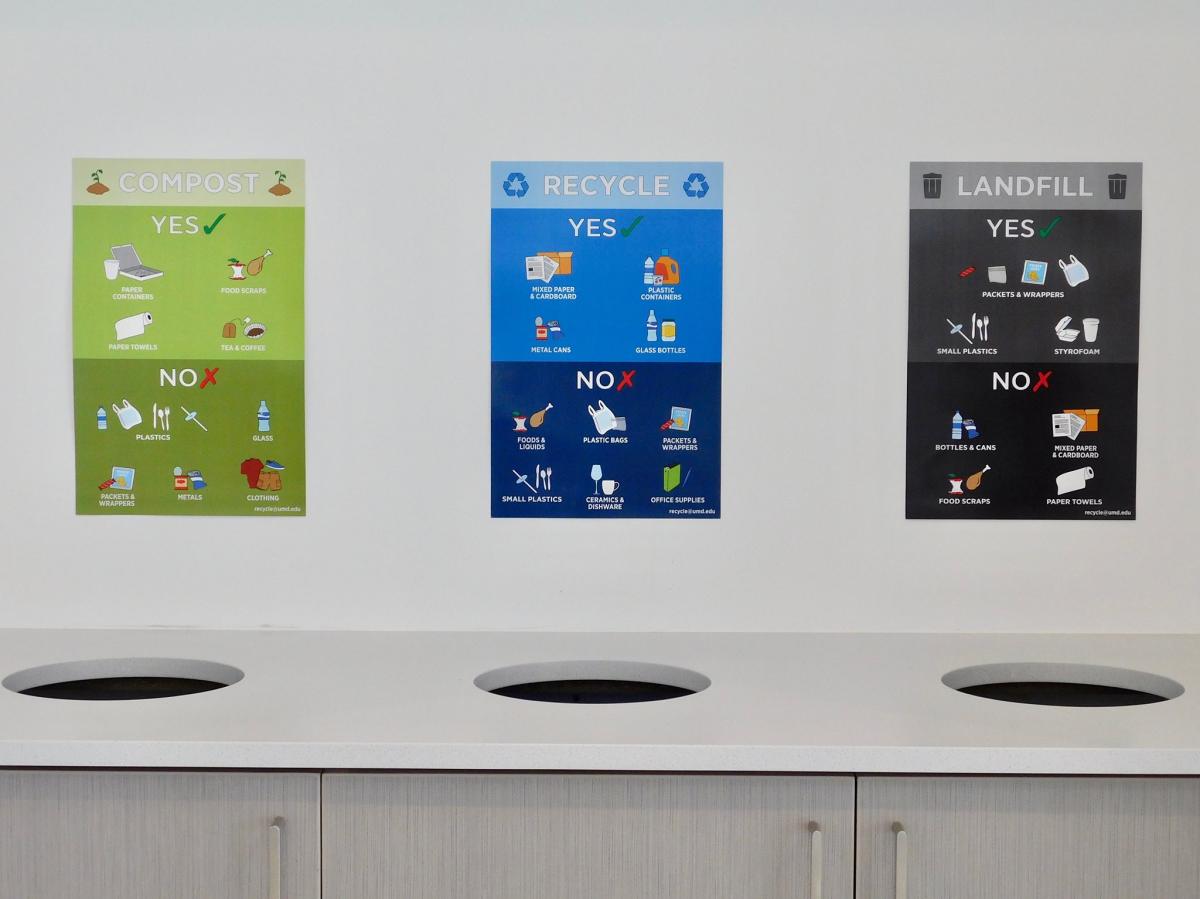
At the waste bins: Terps recycle right & compost correctly to prevent contamination.
After avoiding, reducing, and reusing, the next step of waste minimization starts at the waste collection bins. At UMD, waste is collected and sorted into separate bins: compost, mixed recycling (no glass), and landfilled waste. Labels on the sides of the bin and posters or displays above the bin help individuals sort waste. To review the items to place in each bin, visit recycle.umd.edu. The locations of compost, recycling, and glass recycling dumpsters are a filterable layer on the interactive map of campus at maps.umd.edu. Electronic waste bins around campus can also be located on the interactive map, and information on where to recycle special items such as shredded paper, ink cartridges, and construction debris is listed on the recycling FAQ.
At UMD, glass should be recycled in the purple dumpsters located around campus. Glass cannot go in the regular blue recycling bins since glass can create hazards in waste management when broken.
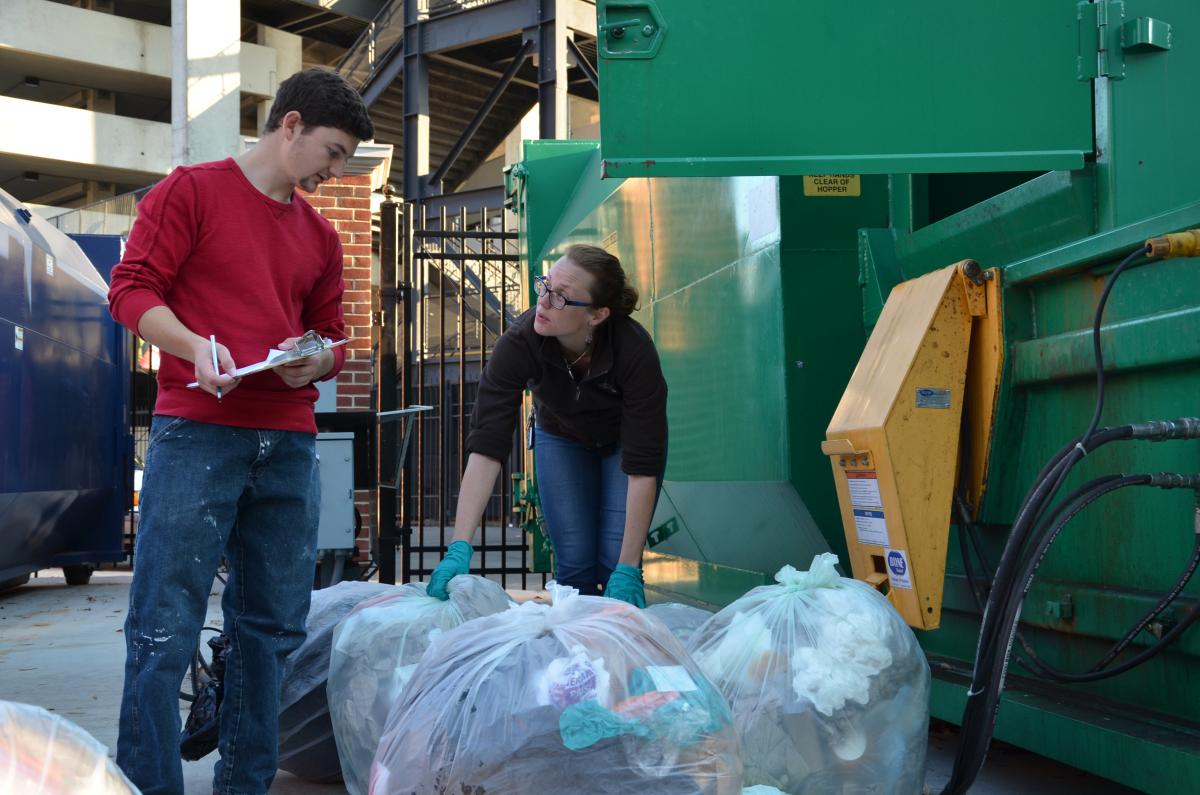
Facilities staff help ensure waste is properly sorted.
Recycling, Housekeeping and Landscape Maintenance staff collect waste from the three-bin waste collection systems around campus and place bagged waste in the appropriate outside collection dumpsters. Compost is compacted onsite before the Recycling team hauls it to the offsite compost facility. According to UMD Recycling Coordinator Adrienne Small, campus waste management teams evaluate the bags of recycling and compost prior to placing them in campus dumpsters. The staff receive training on composting, recycling, and special materials recycling to help with this process. If the staff sees inappropriate items in a bag, they will place the entire bag into a landfill container to maintain contamination-free loads of recycling and composting.
Even with strict contamination limits, the UMD community has made immense progress with waste diversion, increasing from a 25% diversion rate in 2005 to an 81% diversion rate in 2019. These rates increase annually as more UMD community members learn about sustainability and intentionally sort their waste. It is important for all members of the UMD campus community to take the time to consider and sort waste according to UMD guidelines to prevent additional landfilled waste.
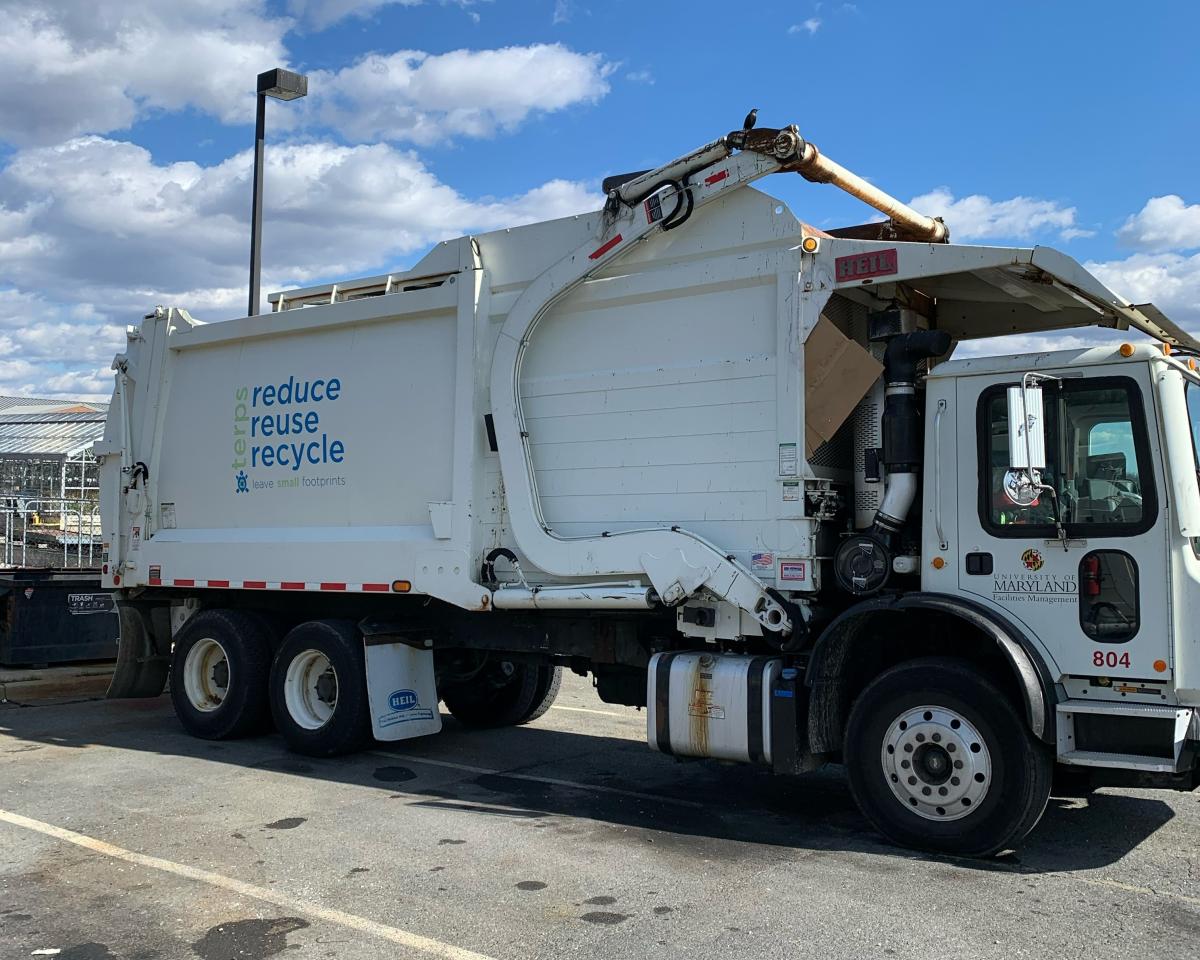
UMD managed trucks haul waste to four different facilities.
At this point in the cycle, waste has flowed from the consumer to the bins to the dumpsters and compactors on campus. From the dumpsters, the Recycling & Solid Waste unit of Facilities Management empties the outdoor dumpsters and transports the materials to appropriate facilities. UMD manages its own waste hauling fleet with five commercially licensed drivers. The waste trucks sport the “Terps Leave Small Footprints” slogan to remind the campus community to be conscious consumers. Learn more about campus waste by visiting the recycling FAQ webpage (link below).
Another large contributor to campus waste generation is construction and demolition (C&D) materials. UMD has successfully diverted materials during demolition for reuse in construction of new campus buildings. For example, over 75% of the materials used to construct the Edward St. John Learning and Teaching Center were recycled or reused. When not reused on campus, C&D waste is sent to Sun Services’ Materials Recycling Facility in Beltsville, MD for separation and marketing to end-user manufacturers.
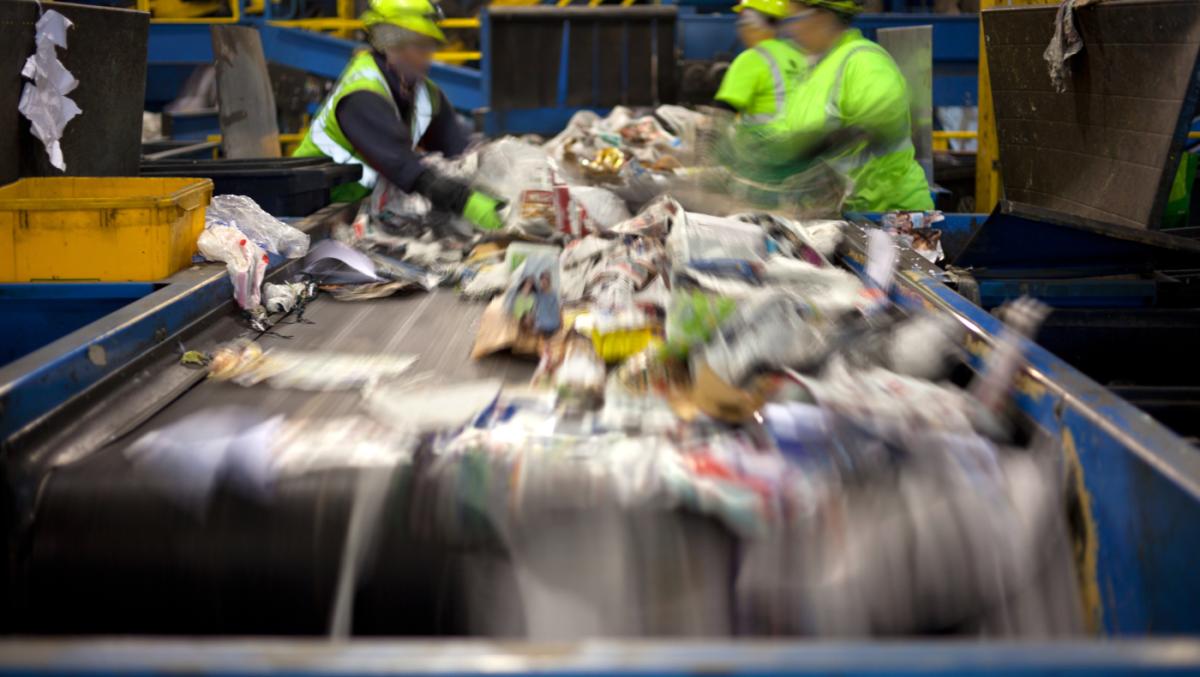
At the recycling facility, clean recyclables are sorted for reuse in new materials.
UMD’s recycling program uses a single stream approach, which is also called “comingled” or mixed recycling. At Olive Street Processing (OSP), sorting technology and equipment separate the recycled materials and prepare them for re-induction into products like paper, clothing, and other plastics. In recycling, it is especially important to reduce contamination as the sorting technology and equipment are sensitive to common contaminants. Commonly found contaminations at UMD include: plastic bags, bin liners and small plastics like straws, lids, and single-use plastic utensils (which are not recyclable). These items can become lodged in the machinery, causing disruptions to the recycling process and damage to the machinery. Food and liquid residues are also common contaminants that can ruin the quality of other materials like cardboard and paper, rendering these items unrecyclable.
Glass recycling is sent to the county-owned landfill in Fairfax County, Virginia. This site processes the glass into sand and stone alternatives which are then used in road construction, to create sandbags, or to create landscape drainage media.
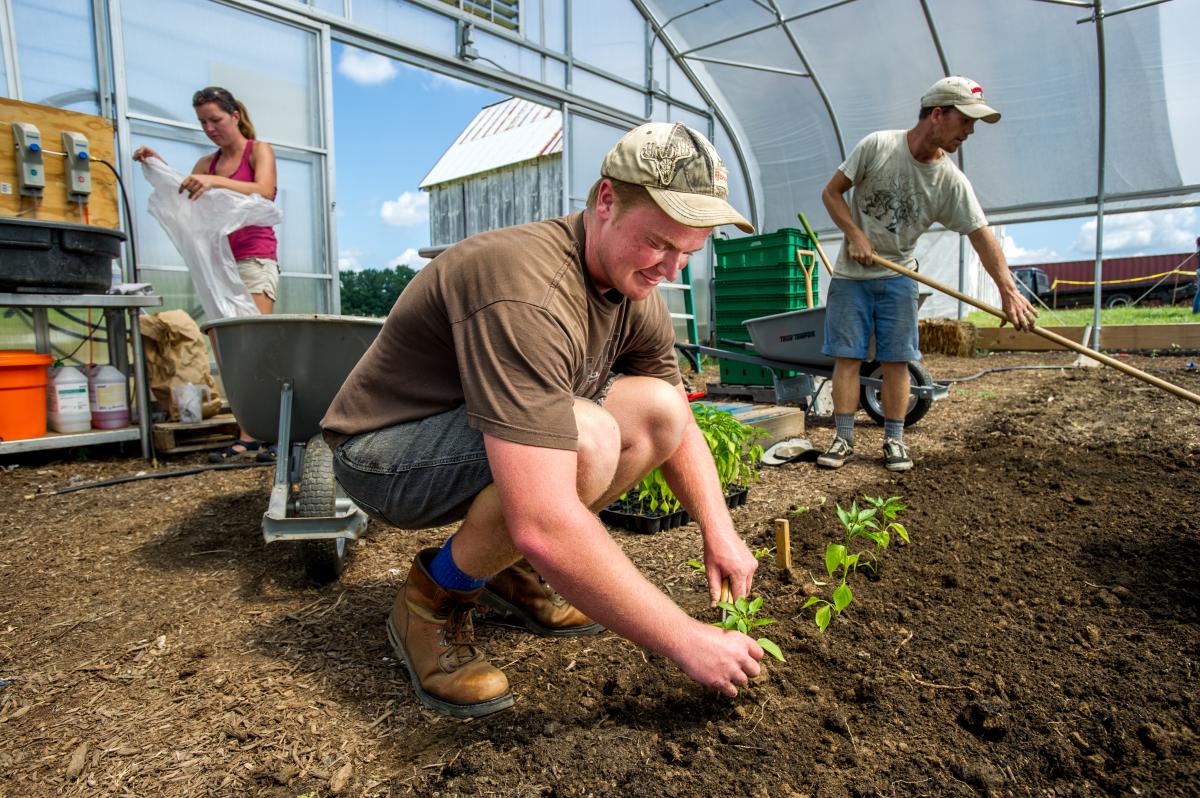
At the compost facility, we close the loop.
The organic waste collected on campus, including food scraps, disposable coffee cups, paper towels and soiled cardboard, is transported to the Prince Georges’ County (PGC) Compost Facility. Preventing contamination in compostable waste is also important to ensure the composting process runs smoothly. When contaminants are identified in compost waste bins, the PGC Compost Facility places the inappropriate material in the dumpster for UMD waste staff to pick up and transport to the landfill.
The collected appropriate compostable waste is then mixed with other organic matter, piled into massive mounds, and left to decompose with the help of tiny microorganisms and other natural processes. The finished product: compost. Compost is a nutrient dense form of soil that is used in addition to other soil media to fertilize and grow plants. The PGC Compost Facility produces the product LeafGro, one of the many organic fertilizers used by UMD’s Terp Farm and Extension programs.
Allison Tjaden Assistant Director for New Initiatives at the University of Maryland Dining Services emphasized the importance of composting, “While composting is not new on campus, it is still amazing that a student’s banana peel or uneaten pizza crust can be turned into such an important product: compost. An even more fun fact: the compost from UMD's organic waste is used to nourish the soil and plants at Terp Farm. Then, these nutritious vegetables are used at UMD’s Dining Halls and donated to the Campus Pantry.” This is an example of a circular economy, or a closed loop system.
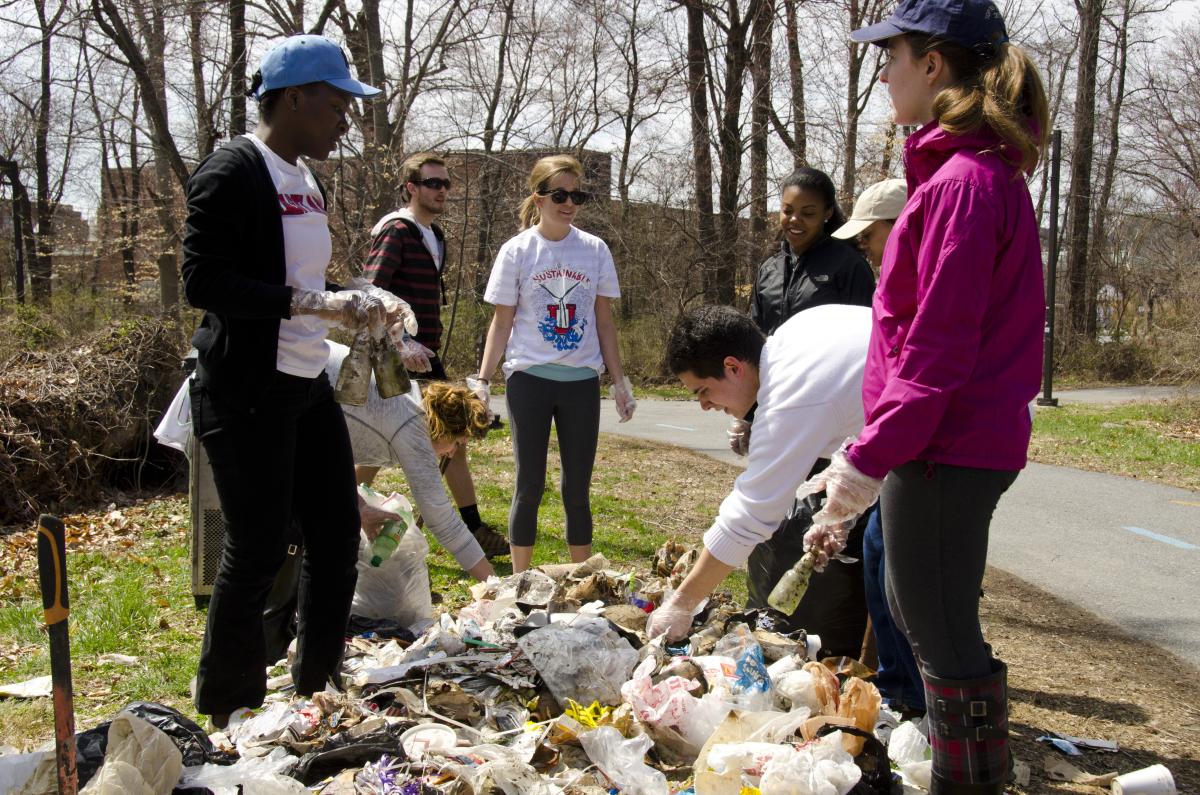
Landfills as a last resort.
After diverting through minimization, recycling, and composting, the remaining waste is sent to a landfill, an engineered and strictly regulated facility for the storage of solid waste. UMD sends landfill waste to Annapolis Junction Transfer Station in Jessup, Maryland, where it is consolidated and shipped to Virginia to be landfilled.
It can take weeks or decades for waste to decompose in landfills, and the process often generates microplastics and methane gas, a greenhouse gas four times more potent than carbon dioxide in the short term. Many new landfills can monitor and capture methane for flaring or electricity generation. Older landfills are more likely to have detrimental environmental and public health impacts. UMD works to ensure that landfill waste is sent to landfills equipped with methane capture and flaring or electrical generation. When using third party contractors, it is more difficult to monitor where waste flows, however with UMD transporting campus landfill waste, UMD is able to ensure more than 90% of campus waste is sent to facilities that capture methane and generate electricity.